If you are a high handicap golfer, you want to select your clubs carefully, as the right equipment can make a dramatic difference to your game. Putting is particularly important because this part of the game can make or break a round of golf.
Having the right putter can quickly help you knock a few strokes off your game. It can also help you as you work to lower your handicap. But the best putters for high handicappers are different from those built for low handicappers. So, what’s the right putter for you?
This guide is written for the average golfer who three-putts too often and wants the ball to hold its line on a strike out of the heel or toe. If your handicap has come down into the teens, our guide to the best putters for mid-handicappers covers that end of the range.
A lot has changed since we last updated this guide. Zero torque putters have gone from a niche idea to the most talked-about design in golf, and almost every brand now makes a forgiving mallet that did not exist two years ago. We went back to the green, retired the putters that are no longer available, and rebuilt this list for 2026.
Read on as we take you through the 10 best putters for high handicappers and what to look for when selecting the right putter for your game. Readers interested in learning about the overall best putters should bookmark our review for later.
at a glance: Our Top 5 Picks for Putters for High Handicappers
- Best Overall: Odyssey Ai-Dual Square 2 Square #7
- Most Forgiving: L.A.B. Golf DF3i
- Best Alignment: TaylorMade Spider Tour
- Best Budget: Cleveland HB Soft 2 #11
- Best Value Zero Torque: Wilson Infinite Zero Torque 606
Putters Buyers Guide
If you’re new to buying putters, you’ll want to check out these features to find the right club for you.
Features to look for in a putter:
- Head design
- Zero torque or face balance
- Face and inserts
- Length
- Shaft weight
- Shaft design
- Balance point
- Grip
- Budget
If you want more information, read our more detailed buyer’s guide below the reviews.
Our Research Parameters
Golfspan is independent and not pressured by manufacturers to recommend products. We were not paid for the reviews in this article. These putters were selected and reviewed by Chris Daniel, a lifelong golfer who has played courses across Europe, Asia and his home state of New South Wales, Australia, then fact-checked by our editorial team before publishing. We may earn an affiliate commission when you purchase something through our retail links. Here’s our product review process.
For this update, we only considered putters that are current and in stock in 2026. To select these putters, we considered these criteria:
- Forgiveness
- Accuracy
- Alignment
- Feel
- Stroke type
- Cost
The putters below are men’s models. If you are shopping for a lady golfer, read our guide to the best putters for women instead.
Quick Overview: Our Top Picks for Putters for High Handicappers
| IMAGE | PRODUCT | DETAILS | |
|---|---|---|---|
 |
Odyssey Ai-Dual Square 2 Square #7 | Best overall. Zero torque head that keeps the face square, with a soft feel and bold alignment for a straight stroke. | CHECK PRICE |

|
L.A.B. Golf DF3i | Most forgiving. Lie Angle Balance squares the face for you, but it must be fitted to your lie and length. | CHECK PRICE |
 |
TaylorMade Spider Tour | Best alignment. True Path graphic frames the ball, and multiple hosels fit a straight stroke or an arc. | CHECK PRICE |
 |
Cleveland HB Soft 2 #11 | Best budget. A genuinely forgiving face-balanced mallet with a soft milled face, for a fraction of the money. | CHECK PRICE |
 |
Wilson Infinite Zero Torque 606 | Best value zero torque. The cheapest way into the technology, with forward shaft lean and a glare-free finish. | CHECK PRICE |
 |
Cobra 3DP Tour Agera | Most stable. A 3D-printed body pushes weight to the perimeter for very high MOI and a superb roll. | CHECK PRICE |
 |
TaylorMade Spider ZT Max | Best premium zero torque. An oversized, heavy head that feels locked in place through the stroke. | CHECK PRICE |

|
Ping Scottsdale Prime Tyne 4 | Best Ping. The highest MOI head in the Scottsdale line, custom fitted, for golfers with an arc. | CHECK PRICE |
 |
Odyssey Ai-ONE 2-Ball | Best alignment aid for an arc. The clearest aiming aid in golf, on a head with 16 degrees of toe hang. | CHECK PRICE |
 |
Mizuno M.Craft OMOI Type I | Best blade. A heavy 370g forged head with the softest feel here, built for a strong arc stroke. | CHECK PRICE |
The 10 Best Putters for High Handicappers 2026
1. Odyssey Ai-Dual Square 2 Square #7 – Best Overall Putter For High Handicappers
Pros:
- Zero torque design keeps the face square
- Soft, quiet feel
- Bold alignment aid for a better aim
- Consistent distance control on long putts
- Built for golfers with a straight stroke
Cons:
- Not suited to golfers with an arched stroke
- Easy to confuse with the Ai-ONE and Tri-Hot #7 models
The Odyssey Ai-Dual Square 2 Square #7 provides high handicappers and mid handicappers alike with forgiveness, a soft feel, and a face that wants to stay square through impact. It is our best putter for high-handicap golfers because it fixes the most common miss in golf, the short putt that gets pulled left.
Odyssey engineers built the #7 as a zero torque putter, which means the shaft runs down through the balance point of the head. Balance it on your finger and the toe points to the sky. In my experience, the face had no interest in rotating open or shut during the stroke, which helped me start more putts on my intended line.
Next, I appreciated the classic #7 fang shape and the bold sightlines on the crown, which framed the ball nicely at address. The head carries enough mass to feel stable without feeling heavy, and it tracked well on long putts, which is where many forgiving mallets give away distance control.
In addition, the dual-layer Ai-Dual insert produced a soft thud rather than a click off the face. It still gave me enough feedback to know when I caught one thin, which is useful as you work on your putting stroke.
Finally, the Square 2 Square setup works best for golfers with a straight back and through stroke. If you have a natural arc, the toe-up balance may feel like it is fighting you. Odyssey offers the #7 in 33, 34 and 35-inch shaft lengths to cover short, medium and tall golfers.
2. L.A.B. Golf DF3i – Most Forgiving Putter For High Handicappers
Pros:
- Lie Angle Balance keeps the face square
- Maximum forgiveness on off-center strikes
- Firm, clear feedback from the milled face
- Custom lie angle and length options
- Works for any stroke once fitted
Cons:
- Premium price tag
- Must be fitted to get the full benefit

L.A.B. Golf has built its entire putter around one idea, and it is the reason the DF3i earns the most forgiving putter title on this list. L.A.B. stands for Lie Angle Balance, and the head is engineered to stay square at the lie angle it is built for, so you are not relying on your hands to hold the face square.
The DF3i is a compact mallet with a shaft that enters the middle of the head, and I admit it looks plain the first time you set it down. But once I started rolling putts, I noticed the face simply refused to twist, even on strikes out of the heel and toe. For high handicappers who leak putts both ways, that is a game changer.
Next, the DF3i uses a 303 stainless steel insert in a milled aluminum head. The feel is firmer than the soft inserts elsewhere on this list, and I enjoyed the clean, positive response that told me exactly where I struck the ball.
However, there is one important catch. The balancing only works at the lie angle the putter is built for, which is why L.A.B. offers custom lie angles from 63 to 79.5 degrees. Buy a stock model with the wrong lie for your setup, and you lose the technology you paid for.
Finally, the DF3i is comfortably the most expensive putter on our list. I recommend it for golfers who are serious about lowering their scores and are willing to get fitted for lie and length. If you are on a tighter budget, skip ahead to the Cleveland and Wilson picks below.
3. TaylorMade Spider Tour – Best Alignment Putter For High Handicappers
Pros:
- True Path alignment for an accurate aim
- Stable mallet head
- Multiple hosel options for every stroke
- Soft Pure Roll insert
- Promotes a consistent roll
Cons:
- Limited stock shaft lengths
- You must choose the right hosel for your stroke
TaylorMade has been a leading putter supplier on the PGA Tour for years, and the Spider range remains a real winner. The latest Spider Tour sits perfectly at address and gives high handicappers one of the clearest alignment aids on the market.
The True Path alignment runs a channel back from the face that frames the ball and shows you exactly where you are aimed. I found it made starting the ball on my intended line feel almost obvious, which helps golfers who miss putts right because their aim is off.
Next, I appreciated the stability of the mallet head. TaylorMade positioned the weight low and deep, which helped the head resist twisting on off-center strikes and produced a smooth, consistent roll.
In addition, the Pure Roll insert delivered a soft, quiet feel. It is kinder on a poor strike than a milled face, which suits nervous putters who need confidence over the ball.
Finally, the Spider Tour is available with multiple hosel options. Golfers with a straight stroke should choose the face-balanced double bend, while those with a slight or moderate arc should consider the L-Neck or Small Slant for added toe hang. The stock lengths are 33, 34 and 35 inches, so anything else is a custom order. For more options from the brand, check out our guide to the best TaylorMade putters.
4. Cleveland HB Soft 2 #11 – Best Budget Putter For High Handicappers
Pros:
- Exceptional value for money
- Forgiving winged mallet design
- Soft feel off the milled face
- Face balanced for straight strokes
- Nine head shapes to suit different strokes
Cons:
- Plain looks
- Easy to order the wrong head, as Cleveland sells nine HB Soft 2 models
High handicappers need an affordable, forgiving putter that encourages accurate putts and a pure roll. The Cleveland HB Soft 2 #11 checks all the boxes in this area and is the best value putter on our list.
The #11 is a clean winged mallet that sits squarely behind the ball. I found the weight distribution provided excellent stability through the stroke, which helped me keep the face square at impact on putts I did not strike perfectly.
Besides its forgiveness, I welcomed the consistent roll produced by Cleveland’s Speed Optimized Face Technology. The milled face pattern varies across the face to help balance ball speed on off-center strikes, which led to more consistent distance control.
Next, the milled face gave off a soft, pleasing feel with good feedback on the putting green. It does not look like a premium putter, but it rolls the ball like one. For the amateur golfer who three-putts from distance, that consistency matters more than a fancy finish.
Finally, Cleveland opted for a single bend shaft on the #11, which creates a face-balanced setup. In my experience, this works best for golfers with a straight back and through stroke. Check the model number carefully before you order, because the #11S is the same head on a slant neck, built for a slight arc instead. Stock lengths are 34 and 35 inches, and the HB Soft 2 line runs to nine head shapes, so there is a version for most strokes. If you want even more affordable options, read our review of the best cheap putters.
5. Wilson Infinite Zero Torque 606 – Best Value Zero Torque Putter
Pros:
- Affordable zero torque putter
- Satin PVD finish reduces glare
- Double-milled face for a consistent roll
- Forward shaft lean gets the ball rolling early
- Stable on off-center strikes
Cons:
- The alignment markings could be bolder
- Only available in 34 and 35-inch lengths
Wilson has a knack for making equipment that is forgiving, consistent, and works for the average golfer and the club amateur. The Infinite Zero Torque 606 brings the most talked-about putter technology of the year to a price that most high handicappers can afford.
First, I noticed the two-tone satin black PVD finish, which does a great job of deflecting glare. There was no flash of light off the crown on sunny days, and the winged head sat calm and square behind the ball.
Next, the double-milled face produced a solid, responsive strike and reliable distance control. Even when I caught putts out of the heel or toe, the zero torque head held the ball on line better than I expected at this price.
Wilson also builds one degree of forward shaft lean into the putter, which helps the ball start rolling instead of skidding. However, it takes a session or two to trust. I pushed a few putts right at first because I kept trying to close a face that was already square. Once I adjusted my aim, I was very solid from inside ten feet.
Finally, the 606 ships with a Wilson Premium Midsize grip, which quietens the hands nicely, and the alignment markings on the crown do their job without shouting. I would prefer them a little bolder. If you want to try zero torque without spending premium money, this is where I would start.
6. Cobra 3DP Tour Agera – Most Stable Putter For High Handicappers
Pros:
- 3D-printed body for very high MOI
- Descending loft face for a clean roll
- Crisp, milled feel
- Adjustable weighting system
- Built for golfers with a straight stroke
Cons:
- The futuristic look is not for everyone
- Not suited to arched strokes
Cobra has always been willing to try something different, and the 3DP Tour Agera is a perfect example. If you want maximum stability and are not precious about looks, this is the putter for you.
Cobra engineers 3D-printed the body as an open lattice, which frees up weight to move out to the perimeter of the head. The result is one of the highest MOI heads I have tested, with an enlarged sweet spot and a head that simply refused to twist on off-center strikes inside 15 feet.
Admittedly, the look splits opinion. You can see straight through parts of the lattice, and some golfers love it while others cannot get past it. Trust your own eye at address.
Next, the face features LA Golf’s Descending Loft Technology, with four lofts of 4, 3, 2 and 1 degrees machined from top to bottom. No matter where I struck the ball on the face, it got rolling end over end quickly, which helped my pace on long lag putts. Plus, the milled stainless face produced a crisp, muted click with excellent feedback.
Finally, the Agera is face balanced with zero toe hang, so it suits golfers with a straight back and through stroke. It also uses an adjustable weighting system, letting you make the head heavier for slow greens or lighter for fast ones, although the extra weights are sold separately.
7. TaylorMade Spider ZT Max – Best Premium Zero Torque Putter
Pros:
- Oversized zero torque head
- Exceptional stability through the stroke
- Built-in forward shaft lean
- Pure Roll insert with good feedback
- Counterbalance and long versions available
Cons:
- Premium price tag
- The large head may feel like too much putter for some golfers
The TaylorMade Spider ZT Max takes the zero torque idea and pairs it with one of the biggest putter heads in golf. The moment you set it down, you can see this putter was built for one thing, maximum forgiveness.
TaylorMade runs the shaft through the center of gravity and adds two degrees of forward lean. Combined with a heavy head of around 379 grams, the putter felt locked in place through my stroke, which helps golfers whose hands get jumpy under pressure.
Next, a single white sightline handles the alignment, and the large shape of the head does the rest by framing the ball at address.
In addition, I was pleasantly surprised by the Pure Roll insert. The feedback was just right, not too firm and not too muted, and my distance control was superb once I got used to the weight. Off-center putts held their line well.
However, the Spider ZT Max is a premium putter, and the Wilson 606 does the same core job for far less money. It also has a very large footprint, which can feel strange if you are moving over from a blade. TaylorMade offers standard, counterbalance, and long versions, so there is an option for most setups.
8. Ping Scottsdale Prime Tyne 4 – Best Ping Putter For High Handicappers
Pros:
- High MOI fang mallet design
- Soft, premium feel
- Excellent alignment at address
- Custom fitted for length and lie
- Center-shafted version available for straight strokes
Cons:
- Not available through the usual online stores
- The standard heel-shafted model is not ideal for straight strokes

Ping putters need no introduction. They have crafted soft-feeling, consistent, and forgiving putters for decades, and the Scottsdale Prime Tyne 4 is the most forgiving head in the current Scottsdale line.
The Prime Tyne 4 is a large, fanged mallet with the weight pushed wide. This high MOI design gave me excellent stability on strikes across the face, which is exactly what high handicappers need from a Ping putter. I would avoid the smaller Scottsdale heads if forgiveness is your priority.
Next, I enjoyed the quiet, dense feel off the face, and the head framed the ball nicely at address. It is a putter that inspires confidence the moment you set it down.
However, there is one thing you must get right. The standard Prime Tyne 4 is heel-shafted, which suits golfers with an arched stroke. If your stroke is straight back and through, ask for the center-shafted version instead.
Finally, Ping sells its putters through fitters and authorized retailers, so you cannot pick one up in two clicks like the others on this list. But a Ping fitting will match the length, lie, and grip to your stroke, which is worth more to a high handicapper than any single feature. Readers who love the brand should check out our full review of the best Ping putters.
9. Odyssey Ai-ONE 2-Ball – Best Alignment Aid For Arched Strokes
Pros:
- Iconic 2-Ball alignment aid
- Soft Ai-ONE insert
- Stable mallet head
- Suits golfers with a slight to moderate arc
- Promotes a quick, consistent roll
Cons:
- Not suited to golfers with a straight stroke
- Some golfers find the two balls distracting
The Odyssey 2-Ball design has been around for over twenty years, and there is a simple reason it is still one of the most popular putters in golf. Two ball-sized circles lined up behind the face point at your target far more clearly than a single thin line.
If your putts miss because your aim is off rather than your stroke, I feel the Ai-ONE 2-Ball is the putter that fixes the real problem. Standing over it, I always knew exactly where the face was pointed.
Next, Odyssey fitted this version with the Ai-ONE insert, which produced a soft but responsive feel. The insert is designed to get the ball rolling quickly, and I enjoyed a consistent roll on putts struck across the face.
Unlike the zero torque putters higher on this list, the 2-Ball has around 16 degrees of toe hang. This makes it the right alignment putter for golfers with a slight to moderate arc. If your stroke is straight, the Spider Tour or one of the zero torque models will serve you better.
Finally, a small number of golfers find the two white balls busy at address. Most love it, but it is worth looking down at one before you buy. For more Odyssey options, see our guide to the best Odyssey putters.
10. Mizuno M.Craft OMOI Type I – Best Blade Putter For High Handicap Golfers
Pros:
- Heavy head for added stability
- Buttery soft forged feel
- Excellent feedback
- Adjustable weights
- Suits golfers with a strong arc
Cons:
- Less forgiving than a mallet
- Premium price tag
Most high handicappers are better off with a mallet, but some golfers simply love the look of a blade. If that is you, the Mizuno M.Craft OMOI Type I is the blade I recommend, and it continues Mizuno’s run as the winner of our best blade putter category.
OMOI means heavy in Japanese, and at around 370 grams, this is one of the heavier putters on this list. That extra mass made the blade far steadier through my stroke than a standard blade, which helped me keep the face square at contact.
Besides its stability, the M.Craft delivered the softest feel of any putter I tested for this review. The head is forged from 1025 mild carbon steel and then milled, producing a pure, buttery strike and excellent feedback on where you caught the ball.
Next, the Type I has around 60 degrees of toe hang, which suits golfers with a strong arc in their stroke. It is not the right choice if you swing the putter straight back and through.
Finally, Mizuno includes adjustable weights to fine-tune the head. Just remember that a blade will always be less forgiving than the mallets above it. If you are set on a blade, check out our full review of the best blade putters.
What To Look For When Selecting a Putter
Buying a putter can be a bit overwhelming, as they come in a bewildering range of shapes, sizes, colors, angles, and weights. All of these are important to the performance of the putter.
It is important to have a basic understanding of the factors to consider so you can make an informed decision and get the best putter for your game. We will take you through these considerations to help you match the right styles and features to your game, maximize your strengths, and mitigate any weaknesses you might have.
The following video will give you a brief overview of putter selection:
Head Design
While all aspects of putter design are important, you want a head that gives you confidence and works for your style of play. Some putters have highly unusual head shapes, and they do not work for everyone.
The main styles are:
- Blade heads
- Mid-mallets
- Mallet heads
- Perimeter-weighted heads

Blades are compact traditional putters, while mallets have a large head, which most high handicappers will find gives them more forgiveness and accuracy. Mid-mallets fall between the two and are quite versatile.
Putters with a high moment of inertia (MOI) will be more forgiving when you do not strike the ball dead center. It simply means the club is less likely to twist on off-center hits. Perimeter weighting also enlarges the sweet spot, so more of the face produces a decent putt. That is why nine of the ten putters on our list are mallets, and you can see more of them in our guide to the best mallet putters and the best high MOI putters.
The video gives an explanation of the putter head options:
Zero Torque Putters
Zero torque putters are the biggest change in putter design since we first wrote this guide. On a normal putter, the shaft joins the head off to one side, so the face naturally wants to rotate open and closed during the stroke.
A zero torque putter places the shaft in line with the head’s balance point, so there is nothing pulling the face out of square. If you balance one on your finger, the toe points to the sky.
These putters help golfers who struggle to hold the face square, which is most high handicappers. However, they do not fix poor distance control or a bad strike. If your misses go both ways with no pattern, a high MOI mallet may help you more.
Faces and Inserts on Putters
Technology improves in leaps and bounds, and putter face inserts are a good example. Many manufacturers now offer a range of inserts, each with specific characteristics.
A soft urethane insert, like those from Odyssey and TaylorMade, produces a quiet feel that flatters a poor strike. A milled or forged face, like the Cobra or Mizuno, feels firmer and gives more feedback. You want a feel that works with your putting style and inspires confidence.
Length
Another critical aspect is the shaft, particularly the length. Golfers vary in height, and the length of the putter needs to be appropriate.
Many golfers do not use the correct length putter, which impedes their performance. Most putters come in 33, 34, and 35-inch options, and a putter that is too long will make you stand too tall and change where your eyes sit over the ball.
It is important to take a comfortable posture and stance when you address your ball on the putting green. Learn how to measure putter length correctly before you buy.
Belly and chest putters are much longer than the traditional 33 to 35-inch options. They help players with bad backs, but some simply find better control with these designs. Belly putters are around 41 to 45 inches, and chest putters range from 45 to 50 inches.
Shaft Weight
The weight and shaft length work together, so it is important to get the balance right. Merely cutting down a putter that is too long for you will change its swing weight and do more harm than good. Golfers with busy hands may also benefit from a counterbalanced putter.
Shaft Design
Many players, particularly beginners, will benefit from an offset shaft. This keeps your hands ahead of the ball and aids control and accuracy. Some newer putters, like the Wilson 606 and TaylorMade Spider ZT Max, also build forward shaft lean into the design to help the ball start rolling sooner.
Balance Point
Some putters have toe hang, while others are face balanced. You want a toe hang option if you play more of an arc-styled stroke. A face-balanced or zero torque putter is better if your stroke goes straight back and through.
Golfers with straight strokes should review our face-balanced putter guide for 2026.
Grips
Putters come in a range of grip sizes, textures, and shapes. The grip has a major impact on putting performance, and it is important to select the one that works best with your style of putting.
While most grips taper lower down, many golfers find a thicker grip more comfortable. A larger grip also limits wrist movement, which helps golfers who flip the face closed. Take a look at our guide to the best putter grips for more options.
Budget
The price range of the best putters for high handicappers spans wide, and you need to factor in your budget. Money spent on a putter means less to spend on other golf equipment or actual rounds of golf.
While quality putters can be expensive, there are well-priced options, like the Cleveland HB Soft 2 and Wilson Infinite 606, that are highly effective.
Best Putters for High Handicappers 2026 FAQs
What Is a Good Putter for a High Handicapper?
While the best putter for beginners will depend on stroke style, high handicappers will want to look out for a high MOI putter. For example, some may benefit from using a center shafted putter while others may not. Our top pick, the Odyssey Hot Pro 2.0, offers this and will suit many different stroke styles.
Are Mallet Putters Better Than Blades for High Handicappers?
The general consensus is that mallet putters are more forgiving than blade putters for high handicappers. But, if you've been playing with a blade putter for years and switch to a mallet putter, you may see an initial rise in your strokes as you adjust to the new weight of your putter.
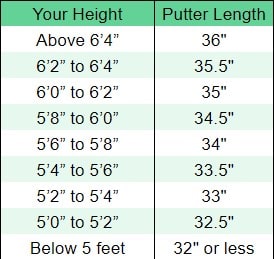
How Many Inches Should My Putter Be?
The length of your putter depends on your height. There are some adjustments to make based on your stroke, but you can use the following table as a good rule of thumb.
What is the Easiest Putter to Hit?
When selecting the best beginner putter, the most important factor is comfort at address. The face angle should suit the eye when lined up to putt the ball. Generally, a face-balanced putter should be used with a mallet-type head. The larger head creates confidence over the ball and is more forgiving on mis-hits. A perimeter weighted head is also recommended.
Are Mallet Putters Really More Forgiving?
With the larger head and perimeter weighting, the high handicapper will develop a putting touch that can be repeated more easily. Putting is practically 50% of all the shots played out on the course, and to improve, this is the area to concentrate on.
Are Scotty Cameron Putters Good for Beginners?
Scotty Cameron putters are a favorite with many of the top golfers on the PGA Tour. Putting wins tournaments and the pros demand the best. These putters are expensive and added to the beginner’s bag, could be overkill. Start out with a putter that you can hone your skill, and then later splash out on a new Scotty Cameron putter.
Is a Mallet or Blade Putter Better for Beginners?
The blade putter may suit the eye and feel comfortable for the beginner. The various inserts allow the ball to roll smoothly after the stroke. It is a matter of preference as the thinner blade head does appeal to some, rather than the thicker mallet putter. Comfort and confidence are the keywords when selecting the putter to put in the bag.
What Kind Of Putter Should A High Handicap Golfer Use?
A high handicap golfer should use a high MOI club head with a forgiving insert or milled face. The high MOI design promotes straighter putts, while the advanced face optimizes friction for consistent topspin and roll.
Are Bigger Putters More Forgiving?
Overall, yes, bigger putters are more forgiving. A larger club head enables engineers to employ perimeter weighting around high-impact points, which helps preserve topspin for a clean roll. Plus, bigger putters contain greater MOI and can resist twisting during the stroke to remain square at contact.
However, with the advancements in golf technology, you do find thinner blade putters which pack a wealth of MOI and forgiveness.
How Forgiving Are Scotty Cameron Putters?
Scotty Cameron putters are forgiving, as they strive to deliver optimal balance, a wide sweet spot, and maximum friction off the clubface. I experienced this with the Phantom X 5, which was lenient on my accuracy and distance control.
Are Expensive Putters Worth It For High Handicappers?
Yes, an expensive new putter is worth it for high handicappers if you are serious about working to lower your handicap. Unlike other golf clubs, you can play the same putter as your game improves, making it a worthwhile investment. This is because your perfect putter is determined by your stroke type and not necessarily your skill level.
Blade Vs Mallet Putter For High Handicapper?
I recommend high handicappers start with the balance, forgiveness and consistency of a mallet putter, before looking at blades. The mallet helps you produce dependable results on off-center strikes, while a blade may not offer the same leniency.
However, if you appreciate a blade putter's soft feel and acoustics, I suggest sticking to something like the PXG Hellcat or Mizuno M Craft OMOI Type II.
For a more detailed rundown of the features and benefits of blades vs mallet putters, read our review.
What Is The Best Putter For A High Handicapper?
The best putter for a high handicapper is the Odyssey Hot Pro 2.0 Seven Bird. It possesses exceptional forgiveness, promotes straighter putts, and produces a clean roll on all strikes.
What Is a Good Putter for a High Handicapper?
While the best putter will depend on your stroke style, high handicappers should look for a high MOI putter. For example, some may benefit from using a center-shafted putter, while others may not. Our top pick, the Odyssey Ai-Dual Square 2 Square #7, offers high MOI and a zero torque design for golfers with a straight stroke.
Are Mallet Putters Better Than Blades for High Handicappers?
The general consensus is that mallet putters are more forgiving than blade putters for high handicappers. But if you’ve been playing with a blade putter for years and switch to a mallet, you may see an initial rise in your strokes as you adjust to the new weight of your putter.
How Many Inches Should My Putter Be?
The length of your putter depends on your height. There are some adjustments to make based on your stroke and posture, but you can use the following table as a good rule of thumb.
What is the Easiest Putter to Hit?
The easiest putter to hit is a high MOI design with perimeter weighting and a forgiving face that preserves topspin on all strikes. For example, the Cobra 3DP Tour Agera uses a 3D-printed body and a descending loft face to produce a clean roll no matter where you strike the ball, which is useful for high handicappers.
What Is The Most Forgiving Putter For A High Handicapper?
The most forgiving putter is a high MOI mallet that resists twisting on an off-center strike. Of the putters on this list, the L.A.B. Golf DF3i is the most forgiving because its Lie Angle Balance design keeps the face square without help from your hands. For most golfers, the Odyssey Ai-Dual Square 2 Square #7 delivers most of that forgiveness for a lot less money.
Are Zero Torque Putters Good for High Handicappers?
Yes, zero torque putters are good for high handicappers who struggle to keep the face square. They resist the face opening and closing during the stroke, which helps golfers who push or pull short putts. The Wilson Infinite Zero Torque 606 is an affordable way to try the technology.
Are Mallet Putters Really More Forgiving?
Yes, mallet putters are more forgiving. Thanks to the larger head and perimeter weighting, high handicappers can develop a putting touch that is easier to repeat. Putting accounts for a large share of the shots played on the course, so this is the area to concentrate on if you want to improve.
Is a Mallet or Blade Putter Better for Beginners?
A mallet putter is the better choice for most beginners because it offers more forgiveness and stability. However, a blade putter may suit the eye and feel more comfortable for some golfers. Comfort and confidence are the key words when selecting the putter to put in the bag. Beginners should also read our guide to the best putters for beginners.
What Is The Best Putter For Bad Putters?
The best putter for bad putters is one that matches the miss. If you pull short putts left, a zero torque model like the Wilson Infinite 606 stops the face closing. If you push them right, an alignment putter like the Odyssey Ai-ONE 2-Ball fixes your aim. If you three-putt from range, a heavy, high MOI mallet gives you better distance control.
What Kind Of Putter Should A High Handicap Golfer Use?
A high handicap golfer should use a high MOI mallet with a forgiving insert or milled face. A high moment of inertia promotes straighter putts on off-center strikes, while the advanced face optimizes friction for consistent topspin and roll. The same advice applies to the average golfer and most mid handicappers.
Are Bigger Putters More Forgiving?
Yes, bigger putters are generally more forgiving. A larger club head allows engineers to position weight around the perimeter, which helps preserve topspin for a clean roll. Bigger putters also have greater MOI and resist twisting during the stroke to remain square at contact.
However, with advancements in golf technology, you can find heavier blade putters, like the Mizuno M.Craft OMOI, which pack more stability than a standard blade.
Are Scotty Cameron Putters Good for High Handicappers?
Scotty Cameron putters are beautifully made and produce a soft feel and pure roll. However, they carry a premium price, and most high handicappers will get more forgiveness for less money from the putters on this list. If you have your heart set on one, read our guide to the best Scotty Cameron putters.
Are Expensive Putters Worth It For High Handicappers?
An expensive putter can be worth it if you are serious about lowering your handicap. Unlike other golf clubs, you can play the same putter as your game improves. This is because your perfect putter is determined by your stroke type, not necessarily your skill level. That said, affordable options like the Cleveland HB Soft 2 perform far better than their price suggests.
Blade Vs Mallet Putter For High Handicapper?
I recommend high handicappers start with the balance, forgiveness, and consistency of a mallet putter before looking at blades. The mallet helps you produce dependable results on off-center strikes, while a blade may not offer the same leniency.
However, if you appreciate a blade putter’s soft feel and acoustics, I suggest sticking to a heavier model like the Mizuno M.Craft OMOI Type I. For a more detailed rundown of the features and benefits of blades vs mallet putters, read our review.
What Is The Best Putter For A High Handicapper?
The best putter for a high handicapper is the Odyssey Ai-Dual Square 2 Square #7. It possesses exceptional forgiveness, keeps the face square through impact, and produces a clean roll on all strikes.
Conclusion
This article should help you understand the important points to consider when selecting a putter, and we have highlighted 10 of the best options for high handicappers in 2026.
While they are all quality choices, the Odyssey Ai-Dual Square 2 Square #7 stands out as our top pick for the best putter for high handicappers. It ticks all the boxes one would look for in a forgiving putter. The zero torque design keeps the face square, the Ai-Dual insert delivers a soft feel, and the #7 head provides excellent stability and alignment. If you are on a budget, the Cleveland HB Soft 2 #11 offers outstanding value.
Take your time to think about your own needs and putting style to select the ideal putter for your game. Back it up with practice, because the right putter and a few sessions with one of the best putting aids will cut more three-putts than either does alone. Once you get used to it, you will start to see your putting numbers drop, which will surely make your game more rewarding.
Chris's love for golf is only rivaled by his wanderlust. A globetrotter at heart, He’s played courses throughout Europe and Asia and at home in NSW, Australia. With a writing style as smooth as his golf swing, he’ll help you find the right gear to match your skill level and style. You can connect with Chris on LinkedIn.