
Slow play frustrates plenty of golfers, and the electric golf scooter is one of the more fun answers to it. Instead of sharing a cart and shuttling between two balls, each player rides straight to their own, so you get more time to work out your yardage and pick a club.
A golf scooter is a single-rider electric vehicle that carries one player and one golf bag. You’ll also see them sold as single-rider golf carts or golf cart scooters, and the moped-style models are often called golf motorcycles. Some are seated two-wheelers, some are three-wheel trikes, and some you ride standing up.
Some public courses now rent them alongside regular carts. The City of Calgary, for example, offers Finn scooters at its McCall Lake and Maple Ridge courses.
Buying your own is a bigger decision. Golf scooters vary a lot in stability, range and after-sales support, many sold online come from importers that publish little about warranties or who they are, and plenty of courses don’t allow personal vehicles at all.
So we’ve built this guide around golf scooters from companies that publish their specifications, warranties and return terms. Our top pick is the Finn Gen 3.0, and most of the scooters below list for $2,599 to $4,499 before shipping. You’ll also find a side-by-side comparison, a buying guide and what to ask your course before you spend any money.
GolfSpan may earn a commission when you buy through links on this page.
Our Top Picks at a Glance
| Image | Scooter | Details | Buy |
|---|---|---|---|
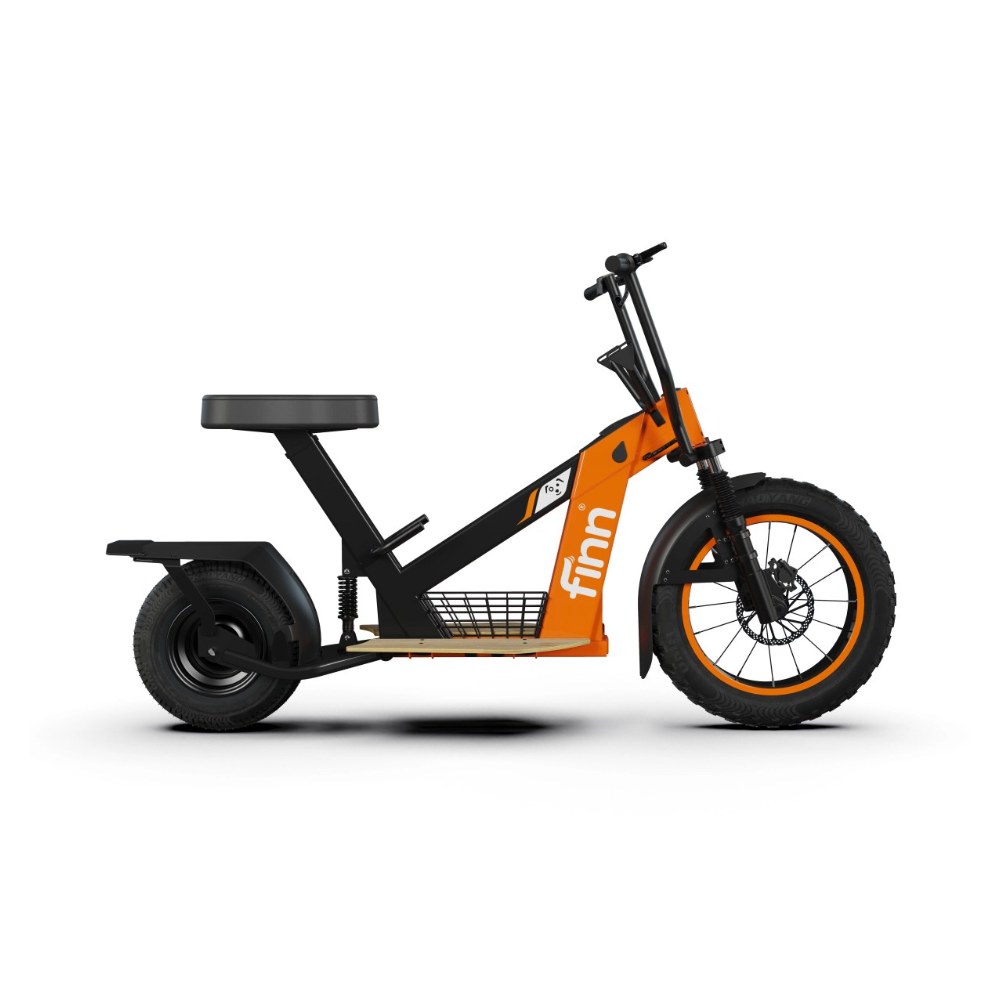
Best Overall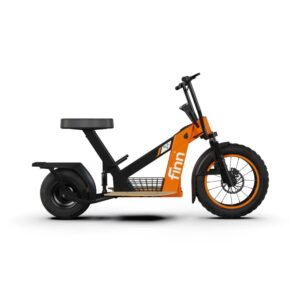 | Finn Gen 3.0$3,499 | A seated two-wheeler built for golf, with the bag carried in the middle, a 15 mph top speed and a two-year warranty on its main parts. | Buy at FinnRead our review |
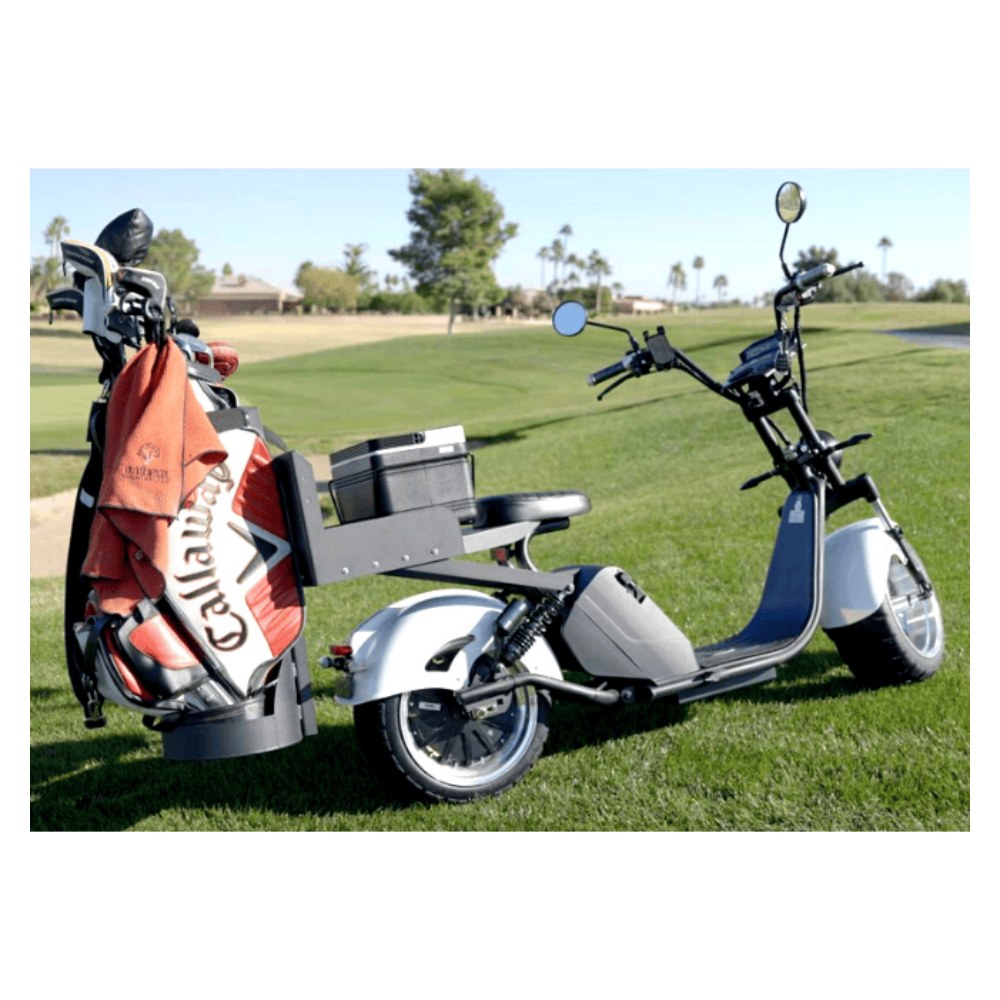
Best Motorcycle-Style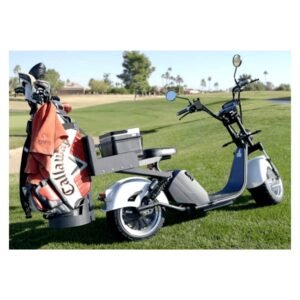 | 14STX Cruiser 3.0$3,999 | A moped-style seated scooter with a 3,000-watt motor, a 15 mph course limiter and a rear holder that takes large tour bags. | Buy at 14STXRead our review |
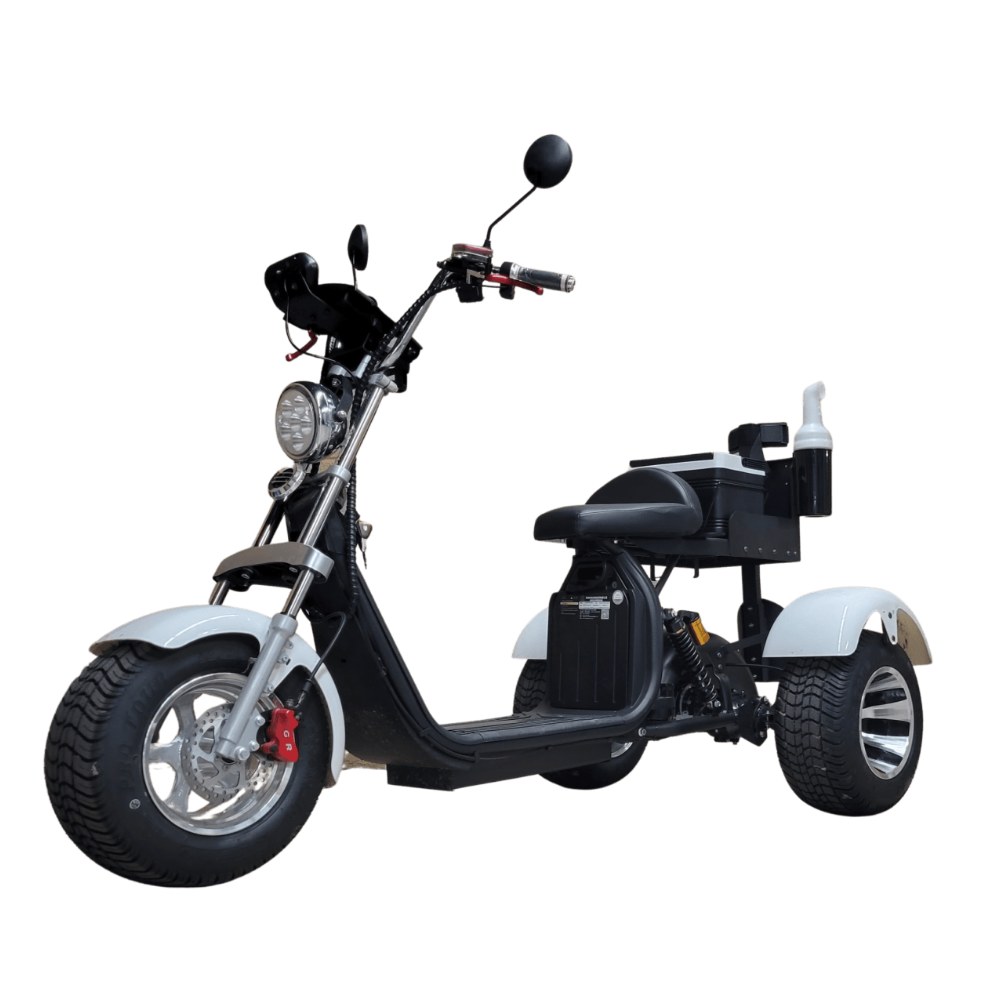
Best Three-Wheel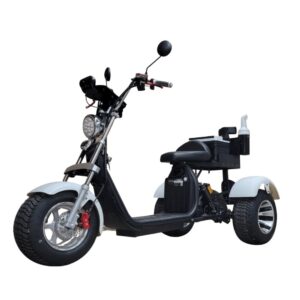 | 14STX Rebel Trike XR$4,499 | A trike that stands on its own, so there’s nothing to balance, with a 35Ah quick-swap battery rated for 36 holes or more. | Buy at 14STXRead our review |
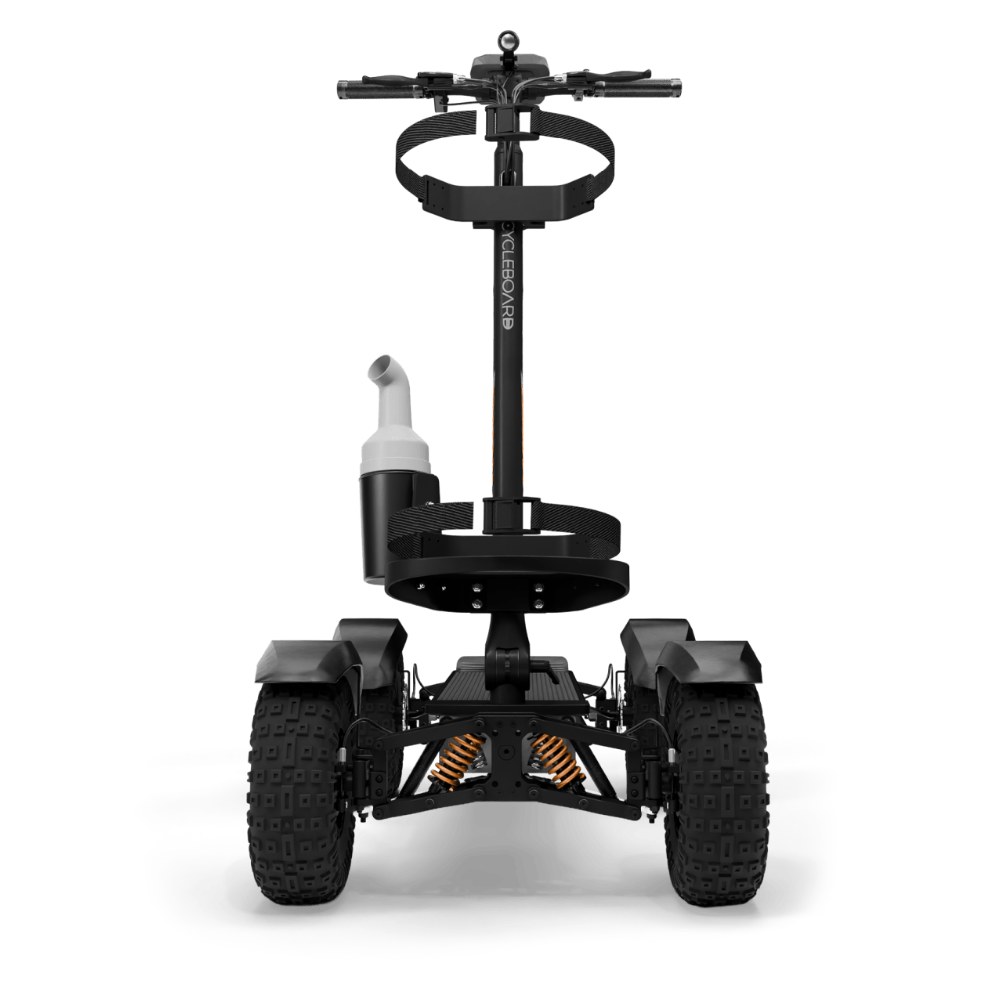
Best Stand-Up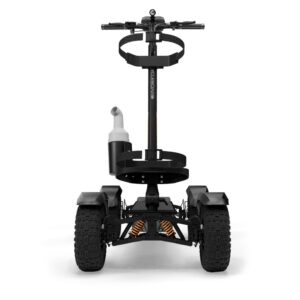 | CycleBoard X-Quad 3000 Golf$4,299 | A four-wheel, lean-to-steer board with a dedicated Golf Mode, golf bag mounts and a three-year warranty on its structural parts. | Buy at CycleBoardRead our review |
Also Consider
| GolfBoard PRO V1.3Price not published | The surf-style stand-up board you may have seen at a resort. Rent one first, as GolfBoard publishes little about the current model. | View at GolfBoardRead more |
Electric Golf Scooters Compared
Prices are list prices before shipping. Range claims assume ideal conditions; hills, heavier riders and cold weather all reduce them.
| Scooter | Price | Type | Top speed | Rated range | Battery | Max rider | Weight | Warranty | Returns |
|---|---|---|---|---|---|---|---|---|---|
| Finn Gen 3.0 | $3,499 | 2 wheels, seated | 15 mph | 36 holes | Slide-in lithiumCapacity not published | 250 lb | Not published | 2 yearsFrame, battery and rear hub motor; 1 year on other parts | 14 daysUnused only; 10% restocking fee plus return shipping |
| 14STX Cruiser 3.0 | $3,999 | 2 wheels, seated | Up to 25 mph15 mph course limiter | 18–36 holesAbout 25 miles | Quick-swap lithiumListed as both 20Ah and 25Ah | 300 lb | 190 lb | 1 yearParts only | 30 days20% restocking fee plus return freight |
| 14STX Rebel Trike XR | $4,499 | 3 wheels, seated | About 21 mph14 mph limiter | 36+ holesAbout 25 miles | 35Ah quick-swap lithiumConfirm the configuration when ordering | 300 lb | 210 lb | 1 yearParts only | 30 days20% restocking fee plus return freight |
| CycleBoard X-Quad 3000 Golf | $4,299 | 4 wheels, standing | Up to 27 mphGolf Mode limits speed | Up to 50 milesIdeal conditions | 60V 30Ah lithium1,800Wh | 350 lb | 125 lbWith battery | 3 years structural1 year on battery and electronics | 30 daysAdvertised as free, but the store policy deducts 15% |
| GolfBoard PRO V1.3 | Not published | 4 wheels, standing | 14+ mph | 27 holes | Not published | Not published | Not published | Not published | Full refund only before shipping$1,000 restocking fee after |
Quick takeaways:
- Heavier riders: the X-Quad is rated for 350 lb and the 14STX scooters for 300 lb. The Finn tops out at 250 lb.
- Easiest to move: at 125 lb, the X-Quad is the lightest scooter here that publishes its weight. The 14STX models weigh 190 to 210 lb.
- Longest frame and motor warranty: the X-Quad’s three years on its structural parts, including the motors. The Finn covers its battery for longer, though: two years against the X-Quad’s one.
- Smallest restocking fee: the Finn’s 10%, but you have only 14 days to return it, and it must be unused.
Our Golf Scooter Picks In Detail
Each of our main picks carries a golf bag, comes from a company that publishes its warranty and return terms and can be ordered now. None is sold on Amazon, so the buttons below go to each maker’s own store. How We Chose These Golf Scooters explains our criteria.
1. Finn Gen 3.0 – Best Overall
Pros
- Purpose-built for golf, with the bag carried in the middle of the scooter
- Hydraulic disc brakes and front and rear suspension
- Slow-start throttle and a 15 mph top speed suit busy courses
- Two-year warranty on the frame, battery and rear hub motor
- Found in course rental fleets, so you may be able to try one first
Cons
- 250 lb rider limit is the lowest of our picks, and the warranty doesn’t cover problems caused by exceeding it
- Finn doesn’t publish the Gen 3’s battery capacity, weight or charge time
- Only 14 days to return it, unused, with a 10% restocking fee and return shipping deducted from your refund
At a Glance
- Price: $3,499
- Number of Wheels: 2
- Sit Or Stand: Sit
- Bag Location: Center
- Battery: Slide-in lithium (capacity not published)
- Rated Range: 36 holes
- Top Speed: 15 mph
- Max Rider Weight: 250 lb
- Weight: Not published
- Warranty: 2 years on the frame, battery and rear hub motor; 1 year on other parts
- Returns: 14 days, with a 10% restocking fee
Best for: most golfers who want a seated scooter that’s easy to learn and built only for the course. Skip it if: you weigh more than 250 lb or want to ride faster than 15 mph.
For most golfers, this is the golf scooter to start with. Finn says its scooters are designed specifically for golf courses. The company is based in Missoula, Montana, and in 2019 Golf Business News described its maker as an affiliate of golf bag brand Sun Mountain.
The bag sits in the middle of the scooter rather than hanging off the front or back. Finn says this leaves the scooter’s balance unaffected.
Finn says the Gen 3 was rebuilt from the ground up. It lists a redesigned frame, an adjustable saddle, front and rear suspension, hydraulic disc brakes and low-pressure treaded tires meant to spread the load and protect the turf.
Its other selling point is availability. Because some courses run Finn rental fleets, you may be able to ride one before you buy.
Independent reviewers who have ridden earlier Finn models on the course liked them. Plugged In Golf rented one for a round, found it easy to use and more fun than a cart, and still had a green battery light after 18 holes; its complaints were the 250 lb limit and the lack of a scorecard holder. Independent Golf Reviews rode one for nine holes and praised its smooth acceleration, though it felt less stable to the reviewer than a traditional cart. Neither review covers the Gen 3.
Under The Hood
Power comes from a 1,000-watt, 48-volt brushless geared hub motor, which Finn describes as a patented planetary-gear design built for torque rather than outright speed. That’s a third of the 3,000 watts quoted for the Cruiser 3.0 and X-Quad, and the 15 mph top speed is the lowest of our main picks, but it’s also all most golfers need between shots.
The thumb throttle has a deliberately slow start, and a display shows speed and battery level. The battery slides into the frame for quick swaps. Finn rates the Gen 3 for 36 holes, though it doesn’t publish the battery’s capacity or a charge time.
2. 14STX Cruiser 3.0 – Best Motorcycle-Style Golf Scooter
Pros
- 3,000-watt waterproof motor, three times the power of the Finn
- Quick-swap lithium battery, with a second battery available for 36-hole days
- Heavy-duty aluminum bag holder that takes large tour bags
- Front and rear suspension and a large, cushioned seat
- Selectable top speeds, including a 15 mph course limiter
Cons
- The one-year warranty covers parts only, not labor or shipping
- Returns carry a 20% restocking fee, and you pay the return freight
- 14STX quotes both 25Ah and 20Ah for the battery, so you’ll need to confirm the capacity
- At 190 lb, it needs a ramp or trailer to move
At a Glance
- Price: $3,999
- Number of Wheels: 2
- Sit Or Stand: Sit
- Bag Location: Rear
- Battery: Quick-swap lithium (listed as both 20Ah and 25Ah)
- Rated Range: 18–36 holes (about 25 miles)
- Top Speed: Up to 25 mph (15 mph course limiter)
- Max Rider Weight: 300 lb
- Weight: 190 lb
- Warranty: 1 year, parts only
- Returns: 30 days, with a 20% restocking fee
Best for: riders who are comfortable on a moped or motorcycle and want plenty of power for hills. Skip it if: you’re nervous on two wheels or need to lift your scooter into a car.
The Cruiser 3.0 is the closest thing on this list to a moped. If you’ve searched for a “golf motorcycle” or a motorcycle-style golf cart, this is the layout you mean: you sit astride it and the bag rides behind you. It’s the only scooter of this type we found that came with a golf bag holder, published warranty and return terms, and a named company behind it.
14STX, the Phoenix company behind the Fat Tire Golf Scooter brand, describes it as having “on-road quality” fit and finish, with 13-inch chrome wheels and wide, low-profile tires.
It’s a two-wheeler, so you balance it like a moped. On a sloping, wet fairway that takes more care than a three- or four-wheeler, so it suits riders who are already comfortable on two wheels.
It comes set up for golf. The heavy-duty aluminum bag holder takes even large tour bags, and a platform on the handlebars holds your scorecard, pencil, tees, balls and a drink.
14STX ships it 98% assembled; you attach the handlebars and bag holder. Its Fat Tire Golf Scooter YouTube channel includes how-to videos, such as replacing a controller and adjusting the brakes on the Rebel Trike, a useful sign that parts and support are available.
Under The Hood
The Cruiser’s 3,000-watt waterproof motor is built for hill climbing, according to 14STX. It has speed settings of 15, 20 and 25 mph, with 15 mph intended as a course limiter.
The lithium-ion battery is a “quick-swap” design. 14STX rates it for 18 to 36 holes (about 25 miles) but quotes both 25Ah and 20Ah for the battery, so confirm the capacity when you order. A spare battery is sold separately if you play 36 holes regularly.
You can charge it on the scooter or take the battery out, from a standard 110-volt outlet; a full charge takes six to eight hours. 14STX says it’s designed for off-road use only, so it isn’t a street vehicle.
3. 14STX Rebel Trike XR – Best Three-Wheel Golf Scooter
Pros
- Three wheels: no balancing and no kickstand needed
- 35Ah quick-swap battery, rated for 36 holes or more
- 14 mph limiter for the course, with faster settings available
- Front and rear suspension and a large, well-cushioned seat
- Aluminum bag holder, plus a cooler and a platform for your scorecard, tees and a drink
Cons
- At 46 inches wide and 210 lb, it needs a trailer or a truck to move
- 14STX doesn’t publish the motor’s power rating
- Parts-only one-year warranty, and returns carry a 20% restocking fee plus return freight
- Ships about four weeks after you order
At a Glance
- Price: $4,499
- Number of Wheels: 3
- Sit Or Stand: Sit
- Bag Location: Rear
- Battery: 35Ah quick-swap lithium
- Rated Range: 36+ holes (about 25 miles)
- Top Speed: About 21 mph (14 mph limiter)
- Max Rider Weight: 300 lb
- Weight: 210 lb
- Warranty: 1 year, parts only
- Returns: 30 days, with a 20% restocking fee
Best for: golfers who don’t want to balance, including older or less confident riders. Skip it if: you don’t have truck or trailer space, or you need a scooter quickly.
14STX built the Rebel Trike XR because, in its words, many courses liked the single-rider idea but wanted more stability “without the need to balance.” The company calls it its easiest model to ride.
With three wheels and a wide stance, it stands on its own, so there’s no kickstand to deploy and nothing to balance at slow speed. That makes it the pick for riders who are nervous on two wheels.
Three wheels don’t make it impossible to tip, though. Like any trike, it can lift a wheel if you turn sharply at speed or ride across a steep side slope, so slow down before turns and ride straight up and down hills where you can.
The trade-off for the stability is size: 14STX lists it at 78 inches long (90 with the bag holder), 46 inches wide and 210 lb, so plan for transport and storage before you buy.
Under The Hood
14STX describes a waterproof, high-torque geared differential motor but doesn’t publish a wattage. Speed settings are about 14, 17 and 21 mph, with the 14 mph limiter meant for course use.
The battery is the biggest 14STX lists: 35Ah, quick-swap, and rated for 36 holes or more (about 25 miles) depending on terrain and rider weight. 14STX has also described it with dual 20Ah batteries, so confirm the configuration when you order. Charging takes six to eight hours.
4. CycleBoard X-Quad 3000 Golf – Best Four-Wheel Stand-Up Scooter
Pros
- The longest structural warranty here: three years on the frame, motors, hubs and suspension
- Highest rider limit of our picks, at 350 lb
- Golf package includes top and bottom bag mounts and a sand repair bottle
- A dedicated Golf Mode trades top speed for torque
- Brakes on all four wheels (drums in front, hydraulic discs at the rear) plus automatic electronic braking
Cons
- Stand-up riding only
- Lean-to-steer handling is different from handlebars, so expect a learning curve
- Eight-hour charge time, and the battery and electronics are covered for only one year
- Returns are advertised as “free,” but CycleBoard’s store policy deducts a 15% restocking fee and doesn’t refund shipping
At a Glance
- Price: $4,299
- Number of Wheels: 4
- Sit Or Stand: Stand
- Bag Location: On the steering column
- Battery: 60V 30Ah lithium-ion
- Rated Range: 50 miles (ideal conditions)
- Top Speed: Up to 27 mph (Golf Mode limits speed)
- Max Rider Weight: 350 lb
- Weight: 125 lb with the battery
- Warranty: 3 years on structural parts; 1 year on the battery and electronics
- Returns: 30 days, with a 15% restocking fee
Best for: golfers who’d rather stand than sit, and heavier riders up to 350 lb. Skip it if: you want a seat, or you’d rather not learn lean-to-steer handling.
If you’d rather stand than sit, the X-Quad is the stand-up option with the most complete published specs and warranty terms we found. CycleBoard is a Garden Grove, California, company known for its lean-to-steer electric vehicles, and the X-Quad Golf is its four-wheel model with a golf package added.
You steer by leaning, like a surfboard or skateboard, while the handlebar gives you something to hold. It’s a different feel from a scooter or cart, so give yourself time on a quiet hole or a cart path before you take it among other groups.
The golf package adds top and bottom bag mounts, a sand repair bottle, fenders and 14 x 5-inch fat tires. At 125 lb with the battery, it’s lighter than the 14STX scooters, though still not something you’ll lift into a car on your own.
CycleBoard covers structural parts, including the frame, handlebars, motors, wheel hubs and suspension, for 36 months, and the battery, display, lights and controller for 12 months.
Under The Hood
Two 1,500-watt hub motors give 3,000 watts in total, and CycleBoard rates the X-Quad for 30% grades. Off the course it can reach 27 mph, which is far more than you need on a fairway, so the Golf Mode matters: it’s tuned for maximum torque at a low top speed.
The 60-volt, 30Ah (1,800Wh) battery uses LG or Samsung cells. CycleBoard quotes up to 50 miles under ideal conditions; expect less on hilly courses. A full charge takes about eight hours, and the display adds theft protection, a parameter lock and a USB charging port.
Also Consider
These two are worth a look, but each is missing something we needed to see before ranking it alongside our main picks.
Finn Hoote

The Hoote is Finn’s lower-priced golf scooter, at $2,599. Unlike the Gen 3.0, you can ride it two ways: stand on its deck and carve between shots like a snowboarder, or sit on its seat and cruise. A step-on side entry makes it quick to get on and off, and the handlebars fold down for transport.
The bag mounts at the front, against the steering column, and Finn rates the Hoote for a 15 mph top speed and 36 holes on a charge.
It’s in “Also Consider” because Finn publishes less about it than about the Gen 3.0. The Hoote’s product page doesn’t list a battery capacity, weight or maximum rider weight, and Finn’s limited warranty names its FinnCycle and FinnScooter products without mentioning the Hoote. Before you order, ask Finn to confirm in writing which warranty covers it and how much weight it’s rated for.
Best for: golfers who like the idea of standing and carving between shots but want a seat for the long holes, at a lower price than our main picks.
GolfBoard PRO V1.3

GolfBoard is the stand-up, surf-style option you may already have seen at a resort. You ride it like a surfboard, leaning to steer. The company had sold around 3,000 boards to more than 300 courses in seven countries by 2022, according to The Bend Bulletin, so there’s a good chance you can rent one somewhere before buying.
It’s in “Also Consider” because GolfBoard publishes very little about the current model. GolfBoard quotes a wider, taller wheel and tire package, a top speed of 14+ mph, a range of 27 holes on all but the most demanding courses, and a board that can go out for a second 18 holes after just under an hour of recharging.
It doesn’t publish a price, battery capacity, weight, rider limit or warranty for the current model, and you order by email or phone. Read the return terms closely: you get a full refund only if you cancel before the board ships. After that, returns carry a $1,000 restocking fee, and you pay for certified hazardous-materials packaging and return shipping.
Rent one first, and ask GolfBoard for current specs, the price and warranty terms in writing.
How We Chose These Golf Scooters
We chose these golf scooters through in-depth research and our experience evaluating golf equipment. We haven’t tested any of the six scooters in this guide hands-on, so every pick rests on what we could verify. For each scooter we considered, we:
- checked its price, specifications, warranty and return policy on the maker’s own website;
- searched the U.S. Consumer Product Safety Commission recall database for the brand, and found no recalls listed for any of our picks;
- checked UK product-safety reports for the import brands we came across, since several are sold in both countries;
- read owner discussions on golf forums such as GolfWRX and the MyGolfSpy forum;
- read independent reviews from golfers who have ridden them, where any exist.
To make our main list, a scooter had to carry a golf bag, come from a company that publishes its specifications, warranty and return terms, be available to order now and have no unresolved safety reports. Scooters that met most of these but left out key details, such as a rider weight limit or a published warranty, went into Also Consider.
We also looked hard at Amazon. The ride-on golf scooters listed there had few or no customer ratings, and none met all four criteria. Several popular import brands sold online didn’t make the cut either: some had no golf bag holder, some gave conflicting specs or warranty terms, and one brand’s golf scooters were the subject of “serious” fire-risk reports from UK safety authorities in 2025.
Why You Should Trust Us
GolfSpan is independent and not pressured by manufacturers to recommend products. We were not paid for the reviews in this article. Our team has over 100 years of golf experience, has spent thousands of hours reviewing golf equipment, and has hand-picked these scooters. We may earn an affiliate commission when you purchase something through our retail links.
How to Choose an Electric Golf Scooter
A golf scooter is a big purchase, and there’s a short adjustment period to riding one well. Here’s what matters most.
Two, Three or Four Wheels
The number of wheels affects a golf scooter’s balance, stability and how easy it is to transport.
- Two wheels come in two layouts. Moped-style scooters, often sold as golf motorcycles, have you sit astride the frame with the bag behind you. Others, like the Finn, carry the bag in the middle. Both are nimble and have the smallest footprint, but you balance them like a moped. Take extra care on wet grass and side slopes; one golfer on GolfWRX reported a course that only lets its motorcycle-style scooters out when the ground is bone dry.
- Three wheels stand on their own and need no balancing, which suits nervous or older riders. They’re wider and heavier, and they can still tip: take sharp turns slowly and avoid riding across steep slopes.
- Four wheels are the most stable when parked. The four-wheelers in this guide are stand-up boards that you steer by leaning, which takes some practice.
Sit, Stand or Both
Seated scooters feel like a moped and are easier on the legs over 18 holes. Stand-up scooters and boards feel closer to surfing or skating, are fun on rolling courses and keep you more active, but they take longer to learn. A few designs let you choose: the Finn Hoote has a deck to stand on and a seat for when you’d rather cruise.
Motor Power, Hills and Wet Ground
If your course is hilly, look at how a scooter is rated for climbing, not just its top speed. Motor power is one clue: our picks range from 1,000 watts on the Finn Gen 3.0 to 3,000 watts on the 14STX Cruiser 3.0 and the CycleBoard X-Quad. A grade rating is better still. CycleBoard, for example, rates the X-Quad for 30% grades. Extra power also helps a heavier rider, and both add to how quickly the battery drains.
Wet ground matters too. Wide, low-pressure tires spread the load and are kinder to soft turf, but any vehicle can mark a wet fairway. Courses often keep carts and scooters on the paths after rain, so a scooter you can ride comfortably on a cart path is more useful than one you can only enjoy on dry grass.
Battery, Range and Charging
Every scooter in this guide is rated for at least 18 holes, and most for more. Treat those figures as best cases: makers quote range in ideal conditions, and hills, rider weight, cold weather and higher speeds all drain the battery faster.
If you play 36 holes, look for a quick-swap battery and price in a spare. Plan your charging too: the 14STX scooters take six to eight hours and the X-Quad about eight, so expect to charge overnight.
Lithium batteries also wear out over time. Ask how many charge cycles the battery is rated for and what a replacement costs. Finn, for example, sells a replacement battery for $499.99 and rates it for 800 to 1,200 charges, depending on care.
Battery Safety
A golf scooter’s lithium battery stores a lot of energy, so it’s worth knowing who made it and how it’s protected. In 2025, UK authorities turned away at least three shipments of ESWING electric golf scooters at the border, rating each a serious fire risk. In one October 2025 report, they found no evidence that a four-wheel model had sufficient battery protection systems.
When you shop, look for:
- A named maker with a physical address, a warranty that covers the battery, and replacement parts you can actually order
- Certification to UL 2272, the safety standard for electrical systems in personal e-mobility devices such as scooters (UL 2849 covers e-bikes). We didn’t find UL certification claims on our picks’ websites, so ask the seller directly
- The charger that came with the scooter. Don’t swap in a cheaper one, and avoid leaving the battery charging unattended overnight
Rider Weight, Size and Transport
Check the rider weight limit before you buy. Ours range from 250 lb on the Finn Gen 3.0 to 350 lb on the X-Quad, and a warranty may not cover problems caused by going over the limit. If a maker counts your bag in the total, leave some margin.
Then think about getting it to the course. Most golf scooters are heavy: the 14STX scooters weigh 190 to 210 lb and the X-Quad 125 lb, so you’ll need a ramp, a trailer, a pickup or a hitch carrier rated for the weight, plus garage space and an outlet for charging. Check the width as well; the Rebel Trike XR is 46 inches wide. If you can’t store it at the course, factor that in first.
Price, Warranty and Returns
The scooters in this guide list for $2,599 to $4,499, and shipping can add a lot: 14STX, for example, charges $495 for delivery in the continental U.S. Ask for the delivered price before you compare.
Read the terms before you order, too. Warranties on our picks run from one year on parts only to three years on structural parts, and restocking fees range from 10% to 20%, or $1,000 for a GolfBoard that has already shipped. Most also leave you to pay return shipping, which isn’t cheap for a scooter this size.
If you’re weighing a scooter against a full-size cart, our guide to the cost of golf carts is a useful comparison.
Accessories
Small extras make a big difference over a round. Look for:
- A secure bag holder that fits your bag size
- Scorecard and pencil holder
- Sand and seed bottle
- Cup holder or cooler
- Phone holder
- Lights, if you play late in the evening
Can You Ride Your Own Golf Scooter On Any Course?
Not without permission. Many courses don’t allow personal vehicles of any kind, and it’s the frustration we saw most often in owner discussions. Check before you buy, not after.
Why Some Courses Say No
The reasons are usually liability and revenue. In a long-running GolfWRX thread, golfers and course staff point out that a course’s insurance may cover only its own fleet, that it can’t limit the speed of a vehicle it doesn’t own, and that cart fees are an important source of income. Some courses that do allow personal vehicles charge an annual trail fee.
Questions to Ask Your Course
Call the courses you play most and ask:
- Do you allow personal golf scooters, and is there a trail or storage fee?
- Do you need proof of insurance, a signed waiver or a short training ride?
- What are the rules on wet days and cart-path-only days?
- Can I charge it on site?
- Do you rent golf scooters, so I can try one first?
On the course, the usual cart etiquette applies; our guide to power cart etiquette covers the basics.
Insurance
Before your first round, ask your insurer whether your homeowner’s or umbrella policy covers injuries and damage you cause while riding a personal golf vehicle, both on the course and on your own property. If it doesn’t, ask whether a separate golf cart policy would cover a single-rider scooter. If your course asks for proof of insurance, this is the paperwork it will want.
Can You Ride a Golf Scooter on the Road?
Don’t assume you can. 14STX, for example, says its scooters are designed for off-road use only. The scooters in this guide also fall outside the federal low-speed vehicle (LSV) class, which lets properly equipped golf-cart-style vehicles use some public roads: that class covers only four-wheeled vehicles with a top speed between 20 and 25 mph. Our guide to street-legal golf carts explains how those rules work.
Beyond that, rules for golf vehicles on public roads vary by state and town, and some set minimum ages for drivers; see our guide to how old you have to be to drive a golf cart. If you want to ride between your home and the course, check with your local authorities first.
Are Golf Scooters Worth It?
For the right golfer, yes. Whether you’re that golfer depends on how often you play, whether your courses will let you ride your own and how you’d otherwise get around.
A golf scooter is worth it if:
- Your home course allows personal vehicles, and any trail fee is reasonable
- You usually play alone or in a group that wants to keep moving
- You play often enough that cart fees add up over a season
- You have somewhere to store and charge it, and a way to move it to other courses
- You’ll enjoy the ride: both independent reviewers cited in our Finn review enjoyed riding one
Skip it, or rent one first, if:
- Your course doesn’t allow personal vehicles, or you mostly play courses that don’t
- You’d rather share a cart and chat between shots
- You’re not comfortable balancing on two wheels and don’t have room for a trike or board
- You’re above the rider weight limit, which runs from 250 to 350 lb for the scooters in this guide
- You’d rather keep walking: one of the best electric golf push carts carries your bag for a fraction of the price
To check the numbers, divide the scooter’s delivered price by what you pay for a cart each round. That tells you how many rounds it takes to break even, before adding any trail fee, the cost of getting it to the course and, eventually, a replacement battery.
Renting first is the cheapest way to find out whether you’ll like one. Some courses keep fleets of golf scooters, including the Calgary courses mentioned at the top of this guide, and GolfBoard has sold its boards to more than 300 courses, so ask your local courses what they rent.
Golf Scooter, Golf Cart, E-Bike or Push Cart?
A golf scooter isn’t the only way to save your legs, and it isn’t the right one for everyone. Here’s how it compares with the other options.
| Option | Riders | Do you walk? | Course access | Transport and storage | Cost |
|---|---|---|---|---|---|
| Golf scooter | 1 | No | Personal scooters need course permission | Heavy; usually a ramp, trailer or pickup | $2,599 to $4,499 for the scooters in this guide |
| Golf cart | 2 or more | No | Most courses rent them; personal carts need permission | Garage space and a trailer to move it | The most expensive to buy |
| Golf e-bike | 1 | No, but you can pedal | Personal e-bikes need course permission | Some fold to fit in a car trunk | From about $1,500, plus a bag carrier if one isn’t included |
| Electric push cart | None | Yes | Widely allowed, though a few clubs restrict them | Usually folds to fit in a car trunk | Far less than a scooter |
Golf scooter: one rider, straight to your own ball, and fun to ride. But you need your course’s permission, plus a way to transport and store it.
Golf cart: seats two or more, and most courses have them to rent. Buying your own is a much larger investment; see our picks for the best golf carts and our guide to golf cart brands.
Golf e-bike: a fat-tire electric bike with a carrier that holds your bag upright behind you, usually for less than a golf scooter. GolfEbikes, from bag-carrier maker Divnick International, sells a folding fat-tire e-bike with its carrier included, and Divnick’s carrier also fits other e-bikes with a rear rack, such as the Heybike Ranger. A personal e-bike still needs your course’s permission, and check its speed setting: Heybike’s Ranger 3.0 Pro, for example, ships limited to 20 mph but can be set to 28 mph. Heybike says the Ranger’s battery is certified to UL 2849, the safety standard for e-bike electrical systems.
Electric push cart: you still walk, but a motor carries your bag. Check your course’s rules on these too, as a few clubs restrict them. See our picks for the best electric golf push carts or, if you don’t need a motor, the best golf push carts.
Golf Scooter FAQ
What is a golf scooter?
A golf scooter is a single-rider electric vehicle designed for the golf course. It carries one player and one golf bag, usually on wide, low-pressure tires meant to protect the turf. Most come with golf extras such as a bag holder, a scorecard holder or a sand bottle.
How much does a golf scooter cost?
The scooters in this guide list for $2,599 (Finn Hoote) to $4,499 (14STX Rebel Trike XR) before shipping, and freight can add hundreds more; 14STX, for example, charges $495 for delivery in the continental U.S. Much cheaper golf scooters are sold online, but most of those we found came from importers that publish little about their warranties or who they are.
Are golf scooters allowed on all golf courses?
No. Many courses don’t allow personal vehicles, mainly because of liability insurance and cart revenue, and some that do charge a trail fee or require insurance and a waiver. Always check with the course before you buy or bring one.
Can you use a mobility scooter on a golf course?
Only if the course allows it, and standard mobility scooters aren’t designed for turf or to carry a golf bag. Ask the course what it offers golfers with disabilities. Some keep adaptive single-rider carts such as the SoloRider, whose seat swivels and rises at the touch of a button so the golfer can hit from it.
Do you need insurance or a license to ride a golf scooter?
Courses set their own rules. Those that allow personal vehicles often ask for proof of insurance and a signed waiver, and some set a minimum age. Ask your insurer whether your homeowner’s or umbrella policy covers you. Off the course, licensing and registration rules depend on your state and town.
Can you use a golf scooter off the golf course?
Often on private property, but don’t assume it’s street legal. 14STX says its scooters are designed for off-road use only. None of the scooters in this guide qualifies as a federal low-speed vehicle, and road rules for golf vehicles vary by state and town.
How fast are golf scooters?
The scooters in this guide top out between 14 and 27 mph. On the course you’ll usually ride slower: Finn’s scooters top out at 15 mph, the 14STX scooters have 14 to 15 mph course limiters, and CycleBoard’s Golf Mode trades speed for torque.
How far can a golf scooter go on one charge?
The scooters in this guide are rated for 18 to 36+ holes, or up to 50 miles in ideal conditions for the X-Quad. Hills, heavier riders and cold weather reduce real-world range, so if you play 36 holes, look for a quick-swap battery and a spare.
Do golf scooters damage the turf?
Golf scooters weigh far less than a full-size cart and usually ride on wide, low-pressure tires to spread the load. Even so, any vehicle can mark soft or wet ground, which is why courses may restrict them on wet days or keep them to the cart paths.
How much weight can a golf scooter carry?
It depends on the model. Our picks are rated for riders from 250 lb (Finn Gen 3.0) to 350 lb (CycleBoard X-Quad). Check whether the limit includes your bag, and don’t exceed it; Finn’s warranty, for example, doesn’t cover problems caused by going over its limit.
Should you buy a used golf scooter?
It can save money, but check the details first. Ask how old the battery is, since a replacement can cost around $500; Finn sells one for $499.99. Ask whether the warranty transfers to a second owner, make sure the maker still sells parts and take a test ride to check the brakes, steering and frame.
How can I avoid golf scooter scams?
Be wary of ads offering a golf scooter for a few hundred dollars, especially from stores you’ve never heard of; the scooters in this guide list for $2,599 or more. Buy from a company that publishes a physical address, warranty and return policy. Before ordering from an unfamiliar store, check it on a site such as ScamAdviser, and pay by credit card for extra protection.
Conclusion
A golf scooter can speed up your round and add some fun between shots, as long as your course will let you ride one. Get permission first, then choose by how you want to ride.
The Finn Gen 3.0 is the best electric golf scooter for most golfers. It’s built only for golf, easy to learn thanks to its slow-start throttle and 15 mph top speed, and backed by a two-year warranty on its frame, battery and rear hub motor. At $3,499, it’s also the lowest-priced of our main picks.
- For a motorcycle-style ride with more power: the 14STX Cruiser 3.0 ($3,999)
- If you’d rather not balance at all: the 14STX Rebel Trike XR ($4,499)
- If you’d rather stand, or weigh up to 350 lb: the CycleBoard X-Quad 3000 Golf ($4,299), which also has the longest structural warranty we found
- If you want to stand or sit for less: the Finn Hoote ($2,599), once Finn confirms its warranty and rider limit in writing
Whichever you choose, rent one first if you can, read the return terms before you order and keep the scooter on the cart path when the ground is wet.

Clint is PGA-certified and was a Head Teaching Professional at one of Toronto's busiest golf academies. He was also featured on Canada's National Golf TV program, "Score Golf Canada," twice. He graduated with a degree in Golf Management from the College of the Desert in California and studied under Callaway's co-founder, Tony Manzoni. He has a handicap index of 6.2 and spends the winters near Oaxaca, Mexico, where he plays twice a month at the Club de Golf Vista Hermosa. He's written over 100 articles at GolfSpan since 2021. You can connect with Clint at LinkedIn, FB, his website, or Clintcpga@gmail.com.


