Tiger Woods announced he’s stepping away from professional golf to seek treatment and focus on his health. That’s the official version.
The fuller version is harder to say out loud, but I think most of us already know what we’re looking at. This is a man who has had more than fifteen surgeries since 2008. He cannot do the one thing he has done his entire life without his body requiring another procedure to recover from the last one. And when you spend that many years managing that level of physical pain, the medications that come with it are not a small detail.
Police found two hydrocodone pills in his left pants pocket after the crash. His movements were described as lethargic and slow. He declined to submit to a urine test. He has since entered treatment at a facility outside the United States. I’m not here to pile on. I’m just telling you what happened.
This is not the first time we’ve been here with Tiger.
In 2017, officers found him asleep at the wheel of a running car with two flat tires. He told investigators it was an unexpected reaction to prescribed medications. He pleaded guilty to reckless driving, entered a diversion program, and checked into a treatment facility that year to address prescription drug use.
That should have been the moment golf had an honest conversation about what Tiger’s body was actually going through. It wasn’t. He came back, won the 2019 Masters, and we collectively exhaled and moved on. Nobody wanted to look too closely at the cost of that comeback.
And now here we are again. His fourth car accident. Another arrest. Another statement. If you want the full picture of what his body has been through over the last two decades, the Tiger Woods injury timeline is a long and brutal read. Every surgery on that list carried a recovery. Every recovery came with medication. That’s not a character judgment. That’s just how this works.
Golf is what broke Tiger’s body in the first place.
Think about that for a second. The thing he’s stepping away from is also the thing that put him in this position. Seven back surgeries. Knee surgeries. A torn Achilles. A 2021 rollover in Los Angeles that nearly cost him his leg entirely. He competed at the 2022 Masters less than fourteen months after that crash, walking Augusta National on a reconstructed right leg.
Every time he came back, we cheered. And every time he came back, his body paid for it afterward. The surgeries kept coming because the golf kept demanding more than his body could give, and the pain management required to bridge those gaps became its own problem.
I’ve said for a while now that if golf is what’s causing the surgeries, and the surgeries are causing the dependency, then the honest answer is to stop playing golf. That’s a hard thing to say about someone whose entire identity is built around the game. But it’s the right thing to say.
The TGL appearance made us all believe something that wasn’t true.
A few weeks before the crash, Tiger played in the TGL indoor golf finals with Jupiter Links. It was his first competitive appearance since the 2024 Open Championship. He looked okay. Not dominant, but present. Golf started buzzing about an Augusta return, and for about ten days the narrative was back on track.
Then came March 27th. His Land Rover rolled over near his home in Jupiter Island, Florida. He climbed out through the passenger window. A breathalyzer came up clean. A urine test was declined. Two hydrocodone pills were in his pocket. The Masters was eight days away.
Augusta chairman Fred Ridley released a statement saying Tiger’s presence would be felt at Augusta even though he wouldn’t be there in person. The PGA Tour put out its own statement of full support. Those statements are what organizations say. They’re appropriate. They’re also beside the point.
The honest question golf doesn’t want to answer.
I’ve been a PGA-certified coach for a long time. I root for Tiger the way everyone roots for Tiger. The 2019 Masters win is still one of the most emotional things I’ve ever watched in this sport. Fred Couples said this week that he tells Tiger he loves him and that the golf is secondary. I feel the same way.
And because I feel that way, I’ll say what the golf industry keeps dancing around. There is a real possibility that we never see Tiger Woods compete in a PGA Tour event again. Not because he doesn’t want to. But because the cost of competing has become too high for his body to keep paying.
He reportedly registered for the 2026 U.S. Senior Open in July. The Champions Tour would let him ride a cart, which takes some of the load off his back and lower body. Maybe that’s the path, if there is one. A slower, more managed version of competition, on a schedule that his body might actually be able to tolerate.
But that conversation comes later. Right now, the only thing that matters is that he gets the help he needs and stays safe. He has two kids. He has people who love him. Golf is a sport. His health is his life.
What I hope people take away from this.
Painkiller dependency after major surgery is not a moral failure. It is a documented medical outcome that happens to a lot of people, including people who are far less famous and get far less compassion than Tiger is receiving right now. The circumstances here are extreme because Tiger’s surgical history is extreme, but the underlying story is not unusual.
What is unusual is doing all of this in public, with every detail of every car accident and every arrest and every treatment decision playing out in front of millions of people who have strong opinions about who you are and what you owe them.
Tiger Woods has won 15 majors. He’s tied for the most PGA Tour wins in history. He changed the game in ways that still haven’t fully been appreciated. You can read the full scope of what he built in his career earnings and legacy if you want the numbers. The numbers are staggering.
None of that is what matters right now. What matters is that a 50-year-old man, who has spent his entire adult life pushing his body past every reasonable limit, is finally stepping back and getting help.
I hope it works. I hope it sticks this time. And if the price of that is never seeing him compete at Augusta again, that’s a trade worth making.
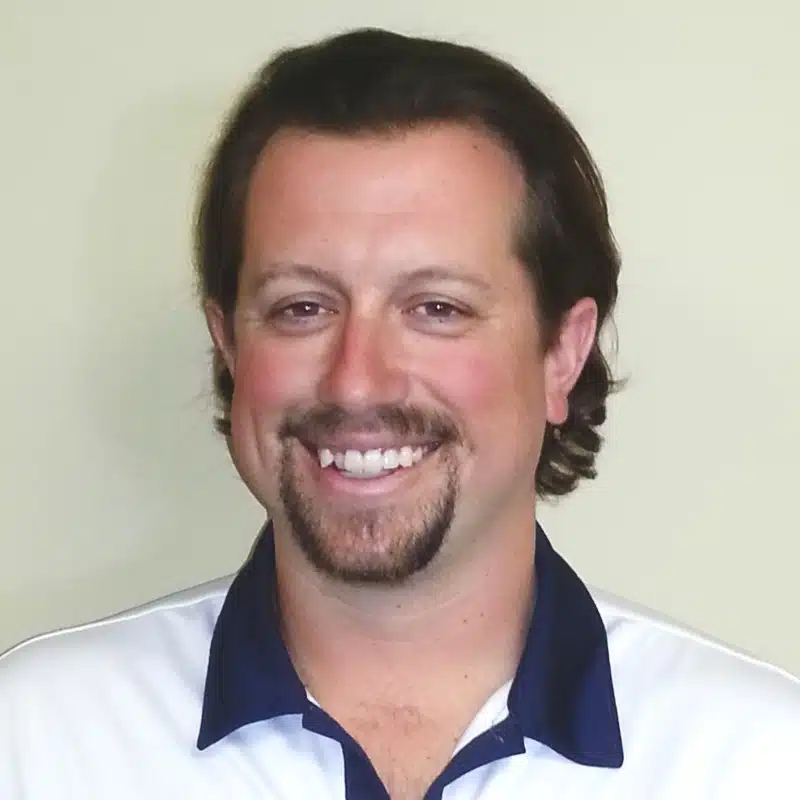
Clint is PGA-certified and was a Head Teaching Professional at one of Toronto's busiest golf academies. He was also featured on Canada's National Golf TV program, "Score Golf Canada," twice. He graduated with a degree in Golf Management from the College of the Desert in California and studied under Callaway's co-founder, Tony Manzoni. He has a handicap index of 6.2 and spends the winters near Oaxaca, Mexico, where he plays twice a month at the Club de Golf Vista Hermosa. He's written over 100 articles at GolfSpan since 2021. You can connect with Clint at LinkedIn, FB, his website, or Clintcpga@gmail.com.