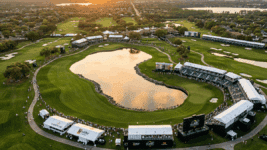
The Saudi Public Investment Fund just told LIV Golf it’s done. Funding ends after the 2026 season. And for some of the biggest names in the game, that news is a lot more serious than it sounds in a headline.
This isn’t just a business story. For certain players, this is a career story. The kind where decisions made years ago for very good reasons are now sitting on the table in a way that’s hard to look at directly.
Bryson Knew Nothing About This Until It Was Already Done
Bryson DeChambeau said publicly that he was completely shocked. He told ESPN he had been assured LIV was funded through 2032. He’d passed that along to people around him. Then the PIF reversed course and nobody called him first.
His contract with LIV expires at the end of 2026. So he’s out of a deal and out of a tour at the same time. His representatives have reportedly reached out to the PGA Tour to test the waters, which Bryson initially denied and then acknowledged days later.
The short version on a return: it’s complicated. Bryson was the lead plaintiff in an antitrust lawsuit against the PGA Tour. That’s a different category than a guy who quietly left and stayed out of the headlines. The Returning Member Program that let Brooks Koepka back in closed in February and is not reopening. Any path back for Bryson would require a new negotiation, and the PGA Tour has made clear it controls the terms of that conversation.
His backup plan, stated directly in interviews, is to focus on growing his YouTube channel. He has 2.7 million subscribers and has filmed content with some of the biggest names in sports and entertainment. That’s a real business. But it’s not the same as competing in majors, and Bryson knows it.
For a closer look at how this rivalry reshaped professional golf, the full PGA vs LIV breakdown covers what these structural differences actually mean for players trying to navigate both sides.
Rahm Is Under Contract and Doesn’t See a Way Out
Jon Rahm’s situation is different from Bryson’s, and in some ways harder.
He has several years left on a reported $300 million LIV contract and has said directly that he doesn’t see many ways out. His words. He told reporters at LIV Virginia that he’s “pretty sure they did a pretty good job” drafting the contract and that as of right now, he’s not thinking about an exit.
Watch him in interviews, though. There’s a flatness there that wasn’t part of how he carried himself when he was the best player in the world on the PGA Tour. I’m not putting words in his mouth. I’m watching someone who looks like a competitor without the right arena.
He’s recently settled his dispute with the DP World Tour, paid his outstanding fines, and agreed to play a handful of European events this season. That keeps the Ryder Cup door open for 2027 at Adare Manor, which clearly matters to him. But the PGA Tour is a different conversation, and right now there’s no path back there either.
Rahm won the Masters in 2023. He is one of the best ball strikers alive. Watching that kind of talent compete without a real answer to where his career goes from here is genuinely uncomfortable.
The Guys Who Were Already Fading Have Less to Lose
Phil Mickelson, Sergio Garcia, Dustin Johnson, Ian Poulter. These players took the LIV money at a point in their careers when a PGA Tour return wasn’t really part of the plan anyway. Phil is past competing at the top level. Garcia has been dealing with his own issues on and off the course. Dustin Johnson is 41.
If LIV folds after 2026, it’s sad for them. They built their teams, they competed, they cashed the checks. But the competitive arc was mostly behind them when they left. LIV isn’t the reason their best golf is in the past.
Bryson and Rahm are different. They left in their primes. Bryson was 29 when he signed with LIV. Rahm joined at 28. These are players who, under different circumstances, would be building major championship legacies right now. Instead they’re staring at a funding collapse with limited options and an organization on the other side that has little reason to make the return easy.
For context on how the LIV era shifted the loyalty calculus for everyone involved, this piece on what Koepka’s return said to the players who stayed is still worth reading. The tension it described hasn’t gone away. It’s just louder now.
What the PGA Tour Owes These Players
Nothing. That’s my honest answer.
The Tour set up a return window. It was available. Koepka took it. DeChambeau, Rahm, and Cameron Smith passed on it, each for their own reasons. The window closed. That’s how it works.
The PGA Tour is a membership organization run by its players. The players who stayed and ground through the LIV era without taking the money are the ones who get a say in what happens next. If that membership decides it doesn’t want to roll out the welcome mat, that’s a legitimate position. If they decide the product is better with Bryson and Rahm in it, that’s also a legitimate position. But the decision belongs to them, not to the players who left.
What the game loses if Rahm and Bryson don’t find their way back to a major stage is real. These are competitors who make events better and more interesting. That’s not nothing. But “good for the product” and “owed a return” are two different things, and conflating them doesn’t do anyone any favors.
For the full picture of what LIV spent, what it built, and why it ultimately couldn’t make the argument stick where it mattered most, this breakdown of how LIV lost its stars, its money, and its argument covers the territory the short headlines skip.
Where This Ends
The most likely outcome is a messy middle. Some players find their way back on hard terms. Some land on the DP World Tour. LIV either finds a smaller backer and limps forward or closes after the season.
Golf survives this. The sport is fine.
But the careers in the balance here are real, and the decisions that put them there were made by adults who understood what they were choosing. That doesn’t make the situation less difficult to watch. It just means the sympathy has to come with some clarity about how we got here.
Do you think the PGA Tour should open a return path for Bryson and Rahm, or does the membership have every right to say the door is closed? Let me know in the comments.
Clint is PGA-certified and was a Head Teaching Professional at one of Toronto's busiest golf academies. He was also featured on Canada's National Golf TV program, "Score Golf Canada," twice. He graduated with a degree in Golf Management from the College of the Desert in California and studied under Callaway's co-founder, Tony Manzoni. He has a handicap index of 6.2 and spends the winters near Oaxaca, Mexico, where he plays twice a month at the Club de Golf Vista Hermosa. He's written over 100 articles at GolfSpan since 2021. You can connect with Clint at LinkedIn, FB, his website, or Clintcpga@gmail.com.