The best wedge shaft is usually the one that matches your irons, adjusted for how you use each wedge. Your pitching and gap wedges should feel like your irons on full swings, while your sand and lob wedges, which you mostly use for partial shots, leave more room to choose a shaft for feel and spin.
If you play heavy steel irons, start with the True Temper Dynamic Gold Tour Issue S400, the most-used wedge shaft on the pro tours and the one Scottie Scheffler plays. For shots that stop faster, the KBS Hi-Rev 2.0 adds height and spin. If your wedges fly too high, the KBS 610 brings the flight down. And if you play graphite irons, the Fujikura MCI Wedge is our graphite pick. Not sure where you fit? Our wedge shaft selector matches you to a shaft in three steps.
I’ve played two of these shafts myself: the Dynamic Gold Spinner and the Black Onyx version of the Dynamic Gold Tour Issue S400. We chose the rest through in-depth research and our experience evaluating golf equipment.
GolfSpan may earn a commission when you buy through links on this page.
Our Top Picks at a Glance
Each pick links to its full review below, with specs, pros and cons.
| Image | Brand & Shaft | Details | Buy |
|---|---|---|---|
Best Overall
| True TemperDynamic Gold Tour Issue S400 | Tour-weight 132 g steel in chrome or black Onyx, and the most-used wedge shaft on tour.Best fit: Heavy steel irons (Dynamic Gold, KBS Tour, Project X) | S400 Onyx on AmazonS400 Chrome on Amazon |
Best for Spin and Higher Launch
| KBSHi-Rev 2.0 Wedge | An active tip that KBS says adds launch and spin, in 115 g R, 125 g S and 135 g X.Best fit: Sand and lob wedges, when you want shots to stop faster | Hi-Rev 2.0 Stiff on AmazonHi-Rev 2.0 Regular on Amazon |
Best for Low Flight and Control
| KBS610 Wedge | KBS’s lower, more penetrating wedge shaft, from 110 g R to 125 g S+, with a thicker .610 butt.Best fit: Players who hit wedges too high or spin them back | 610 Stiff on Amazon610 Regular on Amazon |
Best Dedicated Wedge-Flex Shaft
| True TemperDynamic Gold Spinner | One wedge flex at 128 g, engineered by True Temper specifically for wedge play.Best fit: Dynamic Gold players who want a wedge-specific shaft | Spinner on Amazon |
Best for Project X Iron Players
| Project XWedge | Project X’s wedge-specific shaft in 5.5, 6.0 and 6.5 flexes (115 to 125 g), with a low-to-mid launch.Best fit: Golfers with Project X irons | Project X Wedge 6.0 on AmazonProject X Wedge 5.5 on Amazon |
Best for Modus3 and Lighter Steel Irons
| NipponN.S. Pro Modus3 Wedge | Three weights (111, 122 and 133 g) to pair with your irons, with a low trajectory and less variable spin.Best fit: Modus3 or lighter steel irons | Modus3 Wedge 115 on AmazonModus3 Wedge 105 on Amazon |
Best Graphite
| FujikuraMCI Wedge | Metal-composite graphite at about 108 g or 125 g, each in a higher-spin Solid or lower-spin Mild version.Best fit: Golfers with graphite irons | MCI Wedge at Fujikura |
Which Wedge Shaft Is Right for You?
Choosing a wedge shaft comes down to three steps, in this order: match your iron shafts, decide how you use each wedge, then adjust for your ball flight. Find your situation in the selector below, then read the steps for the reasoning behind it.
| If you… | Start with | Picks to look at |
|---|---|---|
| play heavy steel irons, about 120 g and up (Dynamic Gold, KBS Tour, Project X) | The same shaft family, at the same weight or a few grams heavier | DG Tour Issue S400, DG Spinner, Project X Wedge, KBS 610, KBS Hi-Rev 2.0 |
| play lighter steel irons, about 95 to 115 g | The same weight range, no more than about 10 g heavier | Modus3 Wedge 105 or 115, Project X Wedge 5.5, Hi-Rev 2.0 R, KBS 610 R or R+ |
| play graphite irons | Graphite in at least your gap wedge | Fujikura MCI Wedge |
| have a slower swing or are a senior golfer | A lighter shaft in regular flex, steel or graphite | Modus3 Wedge 105, Hi-Rev 2.0 R, KBS 610 R, MCI Wedge 105. Not sure of your speed? See our swing speed chart. |
| are a high handicapper | The stock shaft in a new wedge, or the one in your irons; clean contact matters more than the shaft | Start with our guide to the best wedges for high handicappers |
| are a mid handicapper | Your iron shaft, changing only to fix a specific flight problem (step 3) | See the best wedges for mid handicappers |
| are a low handicapper | Your iron shaft’s weight, then fine-tune flight and spin | Spin: KBS Hi-Rev 2.0; lower flight: KBS 610; tour favorite: DG Tour Issue S400 |
| want shots to stop faster or launch higher | A shaft designed for more spin or a higher launch | KBS Hi-Rev 2.0, DG Spinner |
| hit wedges too high or spin them back | A firmer, lower-launching shaft | KBS 610, Modus3 Wedge |
| play Project X or Modus3 irons | That maker’s own wedge model | Project X Wedge, Modus3 Wedge |
1. Match Your Iron Shafts First
Your pitching wedge, and usually your gap wedge, gets the same full swing as your irons, so its shaft should feel like theirs. Start with the shaft in your irons and stay close to its weight. A common starting point is to stay within about 10 grams of your iron shafts in these clubs, because a much heavier shaft can feel sluggish and upset your timing on full swings. That matters most if your irons carry lighter steel: jumping straight to a 130-gram wedge shaft is a big change.
If you play graphite irons, keep graphite at least in your gap wedge so its distance and flight stay in step with your short irons. For the iron side of the set, see our guides to the best iron shafts and the best graphite iron shafts.
2. Decide How You Use Each Wedge
Pitching and gap wedges mostly hit full and three-quarter shots, so matching your irons comes first. Sand and lob wedges spend most of their time on chips, pitches and bunker shots, which leaves more room to choose a shaft for feel and spin, often a few grams heavier so you can feel the clubhead on shorter swings.
3. Adjust for Your Ball Flight
Once the weight is right, use your ball flight to fine-tune. If your wedges balloon or spin back off the green, look at a firmer, lower-launching shaft such as the KBS 610, which KBS designs for a lower, more penetrating flight. If shots come out low and release too far, a shaft built for launch and spin, like the KBS Hi-Rev 2.0, can help; KBS says its active tip effectively adds loft at impact.
Compare shafts by each maker’s own launch and spin rating rather than the flex label, because there’s no industry standard for flex: one brand’s stiff or wedge flex won’t match another’s. And keep expectations realistic. A shaft fine-tunes good contact; it can’t fix poor strikes (more on that in Do Wedge Shafts Make a Difference?).
What Is Wedge Flex?
Wedge flex is a label, not a standard stiffness. Shaft and club makers each decide what it means, so two shafts marked “Wedge” can feel quite different, and the label says nothing about weight. Titleist puts the Wedge flex label on its lightweight Dynamic Gold 105 option at 101 grams, for example, while the Dynamic Gold Spinner Tour Issue in Cleveland’s wedges is also Wedge flex at 128 grams.
So compare wedge shafts by weight and by the launch and spin profile the maker lists, not by the word on the label.
Is Wedge Flex Stiff or Regular?
It’s often close to stiff. Titleist and Callaway both fit True Temper Dynamic Gold S200 as their standard wedge shaft, and S200 is a stiff flex; Callaway lists it as “S200 (Stiff).” But because the term isn’t standardized, some wedge-flex shafts play softer, and some are far lighter than a typical stiff steel shaft.
The more reliable guide is your irons. If they’re regular flex, choose a regular version of a wedge shaft, such as the KBS 610 R, Hi-Rev 2.0 R or Project X Wedge 5.5, rather than a default wedge flex. If they’re stiff, a stiff or wedge-flex shaft of similar weight fits. If you play X-flex irons and swing hard, look at a heavier, firmer option such as the S400 or the KBS 610 S+. Our guide to stiff vs. regular flex explains how to tell which you need.
What Each Brand’s “Wedge Flex” Actually Is
If you’re buying new wedges, the stock shaft may already suit you. Here’s what the major wedge makers fit as standard in their current models.
| Wedge | Stock steel shaft | Weight | Notes |
|---|---|---|---|
| Titleist Vokey SM11 | True Temper Dynamic Gold S200 | 128 g | Titleist labels its lighter Dynamic Gold 105 (101 g) “Wedge” flex; graphite option: MRC MMT AMC Red (54–62 g) |
| Callaway Opus SP | True Temper Dynamic Gold Wedge, S200 (Stiff) | Not listed | Graphite option: UST Recoil Dart HDC 65 Wedge |
| Cleveland RTZ 2 Tour Satin | True Temper Dynamic Gold Spinner Tour Issue, Wedge flex | 128 g | Cleveland rates it mid launch, mid-high spin |
| Cleveland RTZ 2 Tour Rack | True Temper Dynamic Gold Tour Issue | Not listed | Cleveland rates it low launch |
| TaylorMade MG5 | True Temper Dynamic Gold Tour Issue 115 | 115 g class | Full-weight Dynamic Gold Tour Issue costs extra |
| TaylorMade Hi-Toe 5 | KBS Hi-Rev 2.0 115 Black | 115 g | Graphite option: UST Recoil Dart 80 |
| PING s259 | PING Z-Z115, Wedge flex | 111 g | Steel and graphite alternatives by custom order |
Even within this short list, wedge-flex shafts run from 101 to 128 grams, which is why the weight matters more than the label. Stock shafts can also change with the finish and model year, so check the spec sheet for the exact wedge you’re buying. For help choosing the head itself, see our guide to the best golf wedges.
S200 vs. S300 vs. S400 in Wedges
All three are stiff flexes in True Temper’s Dynamic Gold line. The number shows where each sits within stiff: S200 is the softest and lightest, S400 the firmest and heaviest, and S300 sits in between. True Temper lists them at 127, 130 and 132 grams, with X100 at 130 grams.
S200 is the stock shaft in Vokey SM11 and Callaway Opus SP wedges, so it’s what many golfers get by default. S400 is the tour favorite (more in the S400 review). If you’re choosing between S400 and X100 for your wedges, it comes down to weight and feel: S400 is 2 grams heavier but a touch softer.
S400 and X100 also come in True Temper’s Tour Issue version, which the company says holds “the industry’s tightest weight tolerance.” S200 and S300 are sold only in standard Dynamic Gold.
The Best Wedge Shafts of 2026, Reviewed
Each review below covers who the shaft suits, its maker’s published specs, what independent tests and tour bags show, and when another pick would suit you better. The buying tip under each one tells you which version the button opens and where to find the other flexes.
1. True Temper Dynamic Gold Tour Issue S400 – Best Overall

Dynamic Gold is the shaft most wedge shafts are measured against, and the Tour Issue is True Temper’s premium version of it. True Temper says its Tour Issue shafts “hold the industry’s tightest weight tolerance,” which means less weight variation from one shaft to the next. In S400 it weighs 132 grams, heavy enough to feel the clubhead on short, delicate swings.
It’s also the wedge shaft tour players trust most. In February 2026, Golf Monthly reported that every PGA Tour winner that season so far had Dynamic Gold Tour Issue in their wedges, and called the S400 “the most used in the wedges on the professional circuits.” Scottie Scheffler plays X100 in his irons and S400 in all of his wedges.
I’ve played the Black Onyx version. I found the stiffness suited my moderate tempo, and the reduced launch promoted greater distance control. Unfortunately, it fell apart for me on spin: it gave me less than my game needs. Conversely, players who generate excess spin will welcome the short game control it offers.
The wedge-length shaft is 37 inches before it’s cut, and it comes in S400 or the stiffer X100 (130 grams), in chrome or a black Onyx finish. True Temper doesn’t publish a launch or spin rating for it, but Cleveland describes the Dynamic Gold Tour Issue in its RTZ 2 Tour Rack wedges as low launch.
Who It’s For
Better players and anyone with heavy steel in their irons, especially Dynamic Gold S300, S400 or X100, who want a heavy, stable wedge shaft and a flight they can control.
Look Elsewhere If
You want more spin and height (the KBS Hi-Rev 2.0 is built for that), your iron shafts weigh well under 120 grams (the Modus3 Wedge is an easier step), or you’d rather play graphite (the Fujikura MCI Wedge).
Specs
| Weight | S400: 132 g; X100: 130 g |
|---|---|
| Flexes | S400, X100 |
| Tip | .355″ taper |
| Raw length | 37″ |
| Finishes | Chrome, Onyx (black) |
Pros
- The most-used wedge shaft on the professional tours
- Tour Issue’s tight weight tolerance
- Heavy, stable feel on short swings
- Chrome or black Onyx finish
Cons
- Heavy for golfers with lighter iron shafts
- Gave me less spin than I wanted
- One owner reports the black Onyx finish chipping quickly
- Costs more than standard Dynamic Gold
Buying tip: the first button opens the Onyx S400, the version I played, and the second opens chrome S400. For a stiffer shaft, Amazon also lists the X100 in Onyx and chrome. If you don’t need Tour Issue’s tighter tolerance, standard Dynamic Gold in S200 or S300 costs less, and that listing lets you choose the flex and length.
2. KBS Hi-Rev 2.0 Wedge – Best for Spin and Higher Launch

The Hi-Rev 2.0 is KBS’s high-spin wedge shaft. KBS says its active tip section “increases the effective loft” at impact, for a higher launch and added spin. It comes in R, S and X at 115, 125 and 135 grams, in chrome or black gloss, and TaylorMade fits a black 115-gram version as the stock steel shaft in its Hi-Toe 5 wedges.
Independent testing backs up the spin claim, with a caveat. In Today’s Golfer’s test of four KBS shafts in a 52-degree wedge, the Hi-Rev 2.0 produced the most spin and the highest launch, yet the tester could barely feel a difference between them. GolfWRX’s review found it added grip from the rough but produced too much spin on full shots with a 56-degree wedge, and owners on Amazon also report extra spin.
Who It’s For
Golfers who struggle to stop the ball on the green, play firm greens or want help getting partial shots up quickly.
Look Elsewhere If
You already hit your wedges high or spin full shots back too far. The KBS 610 or Dynamic Gold Tour Issue S400 will keep the flight down.
Specs
| Weight | R: 115 g; S: 125 g; X: 135 g |
|---|---|
| Flexes | R, S, X |
| Tip | .355″ taper |
| Butt diameter | .600″ |
| Raw length | 37″ |
| Launch and spin (KBS) | Higher launch, added spin |
| Finishes | Chrome, black gloss |
Pros
- Built for higher launch and more spin
- Most spin of four KBS shafts in Today’s Golfer’s test
- Three weights, from 115 to 135 grams
- Stock steel shaft in TaylorMade’s Hi-Toe 5
Cons
- Can over-spin full shots
- Adds height that golfers who already hit it high don’t need
- The extra spin can be hard to feel
Buying tip: the button opens a listing where you choose the flex. Amazon also lists the stiff (125-gram) and regular (115-gram) versions separately; the regular is the same weight as the Hi-Toe 5’s stock shaft.
3. KBS 610 Wedge – Best for Low Flight and Control

The 610 is the opposite of the Hi-Rev 2.0. KBS designed it for a “lower, more penetrating ball flight with controlled spin.” It comes in four weights: R (110 grams), R+ (115), S (120) and S+ (125).
The name comes from its butt diameter, .610 inches instead of the usual .600, which makes the grip feel slightly thicker unless your clubmaker adjusts the grip build.
Independent tests support the low flight. In Golfmagic’s GC2 launch monitor test with a 56-degree wedge, the 610 launched about 2 degrees lower than the reviewer’s existing wedge shaft, carried about 3 yards farther and grouped full shots more tightly, though it felt no different around the green. GolfWRX’s review called it “impressively stable and low-launching,” and Driving Range Heroes found it firm and good for knockdowns but too much shaft for a 60-degree wedge.
Who It’s For
Strong players who hit their wedges too high or spin them back too far, and anyone who likes to flight wedge shots down.
Look Elsewhere If
You want help getting the ball up, mostly hit soft shots with a 60-degree wedge, or prefer a softer feel. The Hi-Rev 2.0 or Dynamic Gold Spinner will suit you better.
Specs
| Weight | R: 110 g; R+: 115 g; S: 120 g; S+: 125 g |
|---|---|
| Flexes | R, R+, S, S+ |
| Tip | .355″ taper |
| Raw length | 37″ |
| Butt diameter | .610″ |
| Launch and spin (KBS) | Lower, penetrating flight; controlled spin |
| Finishes | Chrome, black gloss |
Pros
- Lower, more penetrating flight
- Tighter full-shot grouping in Golfmagic’s test
- Four weights, including half flexes
Cons
- Firm feel
- Thicker butt changes how the grip fits
- Too stout for some golfers in a 60-degree wedge
Buying tip: the button opens the stiff (120-gram) version. The regular (110-gram) and stiff-plus (125-gram) are separate listings.
4. True Temper Dynamic Gold Spinner – Best Dedicated Wedge-Flex Shaft

True Temper says the Dynamic Gold Spinner is “engineered specifically for wedge play, delivering maximum spin and control around the greens.” Unlike standard Dynamic Gold, it comes in a single wedge flex, so there’s no flex to choose. It weighs 128 grams, a little lighter than the S400, and Cleveland fits the Tour Issue version as standard in its RTZ 2 Tour Satin wedges, where it rates the shaft mid launch and mid-high spin.
I produced moderate greenside spin with the Spinner Wedge, which made it easier to control my short shots and prevented the spin from taking over and impacting my distance control. The raw shaft is 37.5 inches long, which you will likely need to reduce by approximately 2 inches.
As a mid-handicapper who performed well with the Spinner wedge shaft, I recommend it to my peers. Golfers can enjoy optimal control, a pleasant feel, and adequate spin around the green.
One watch-out: some owners on golf forums say it flew higher than they expected, so if your wedges already balloon, try one before you reshaft a set.
Who It’s For
Mid handicappers and Dynamic Gold iron players who want a dedicated wedge shaft without having to choose a flex.
Look Elsewhere If
You need a lighter shaft (the Modus3 Wedge 105 weighs 111 grams) or want a lower, flatter flight (the KBS 610).
Specs
| Weight | 128 g |
|---|---|
| Flex | Wedge |
| Tip | .355″ |
| Launch and spin (Cleveland) | Mid launch, mid-high spin |
| Stock in | Cleveland RTZ 2 Tour Satin |
Pros
- Designed only for wedges, with one simple flex
- Gave me controllable spin around the green
- Part of the Dynamic Gold family, a little lighter than the S400
- Stock in Cleveland’s RTZ 2 Tour Satin wedges
Cons
- Only one flex and weight
- Heavy for golfers with lighter iron shafts
- Some owners say it flies higher than expected
Buying tip: Amazon sellers list it as the Dynamic Gold Tour Issue Spinner, while True Temper sells it as the Dynamic Gold Spinner.
5. Project X Wedge – Best for Project X Iron Players

The Project X Wedge gives Project X iron players a wedge-specific version of their shaft rather than a cut-down iron shaft. It comes in 5.5, 6.0 and 6.5 flexes at 115, 120 and 125 grams, and True Temper describes its launch as low to mid.
True Temper says the Wedge plays about 10 cycles per minute (cpm) softer than a Project X iron shaft with the same number, so if you like the feel of your Project X irons, consider going one step firmer in your wedges. Rory McIlroy plays a Project X 6.5 Wedge in his 60-degree wedge. It’s a natural partner for Project X iron shafts, including the LZ (see our Project X LZ review).
Who It’s For
Project X iron players, and golfers who want a low-to-mid flight from a 115- to 125-gram steel wedge shaft.
Look Elsewhere If
You want a firmer, lower-launching shaft (the KBS 610) or need something lighter than 115 grams (the Modus3 Wedge 105).
Specs
| Weight | 5.5: 115 g; 6.0: 120 g; 6.5: 125 g |
|---|---|
| Flexes | 5.5, 6.0, 6.5 |
| Tip | .355″ taper |
| Raw length | 36.5″ |
| Launch (True Temper) | Low to mid |
Pros
- Wedge-specific version of a Project X shaft
- Three weights to match Project X irons
- In Rory McIlroy’s 60-degree wedge
Cons
- Plays softer than your Project X irons with the same number
- Nothing lighter than 115 grams
- No independent test results yet
Buying tip: the button opens the 6.0. Each flex is a separate Amazon listing, so there are also the 5.5 and the 6.5.
6. Nippon N.S. Pro Modus3 Wedge – Best for Modus3 and Lighter Steel Irons
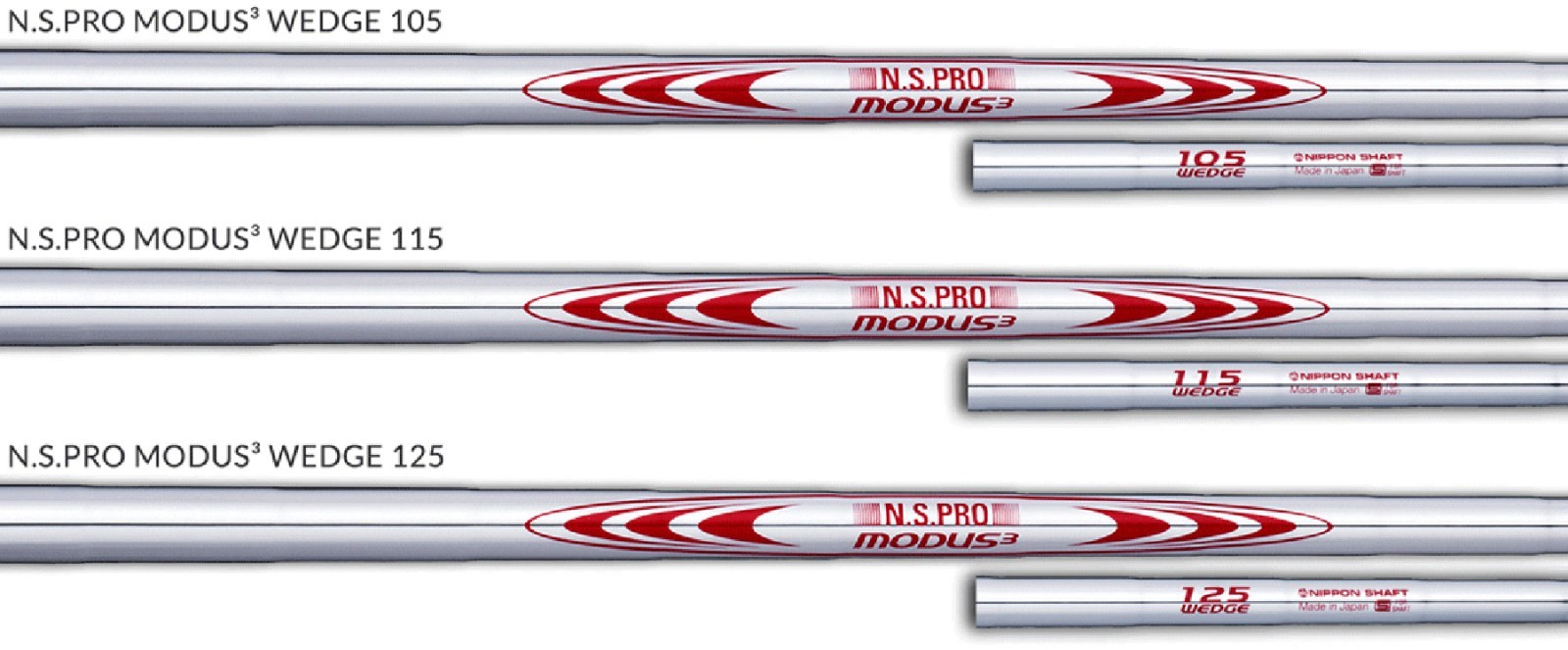
Nippon designed the Modus3 Wedge for wedges only and offers it in three weights, so you can match it to most steel iron shafts: the Wedge 105 weighs 111 grams, the 115 weighs 122 and the 125 weighs 133. The 105 is one of the two lightest steel options among our picks, alongside the 110-gram KBS 610 R, and suits golfers whose irons carry something lighter than tour-weight Dynamic Gold. It’s also a natural partner for Modus3 iron shafts.
Nippon says it delivers a low trajectory and less variable spin. Independent reviews mostly agree. Plugged In Golf saw consistent spin and direction on a launch monitor and called the feel “incredibly crisp,” and The Hackers Paradise found it stable, with softer landings but less action on shots from 100 to 120 yards. Not every test favors it, though: in a GolfWRX fitter’s three-shaft comparison with one player, the Dynamic Gold Tour Issue S400 grouped more tightly than the Modus3 Wedge 105.
Who It’s For
Golfers with Modus3 or other lighter steel iron shafts, and anyone who wants a steel wedge shaft lighter than 120 grams.
Look Elsewhere If
You need more height and spin from your wedges (the Hi-Rev 2.0) or you want graphite (the Fujikura MCI Wedge).
Specs
| Weight | Wedge 105: 111 g; Wedge 115: 122 g; Wedge 125: 133 g |
|---|---|
| Flex | Wedge |
| Torque | 105: 1.6°; 115: 1.5°; 125: 1.3° |
| Kick point | Mid |
| Launch and spin (Nippon) | Low trajectory, less variable spin |
Pros
- Three weights to match your irons
- Consistent spin and direction in Plugged In Golf’s test
- Crisp feel
Cons
- Low flight may not suit slower swings that need height
- Grouped less tightly than the S400 in one fitter’s test
- Fewer single-shaft listings on Amazon than Dynamic Gold or KBS
Buying tip: the button opens the Wedge 115. The Wedge 105 has its own listing, and there’s also a three-shaft bundle of the 105 if you’re reshafting a set. If you play Dynamic Gold 105 or 115 irons and want to stay with Dynamic Gold, Amazon also sells Dynamic Gold 115 (S300) in wedge length.
7. Fujikura MCI Wedge – Best Graphite Wedge Shaft
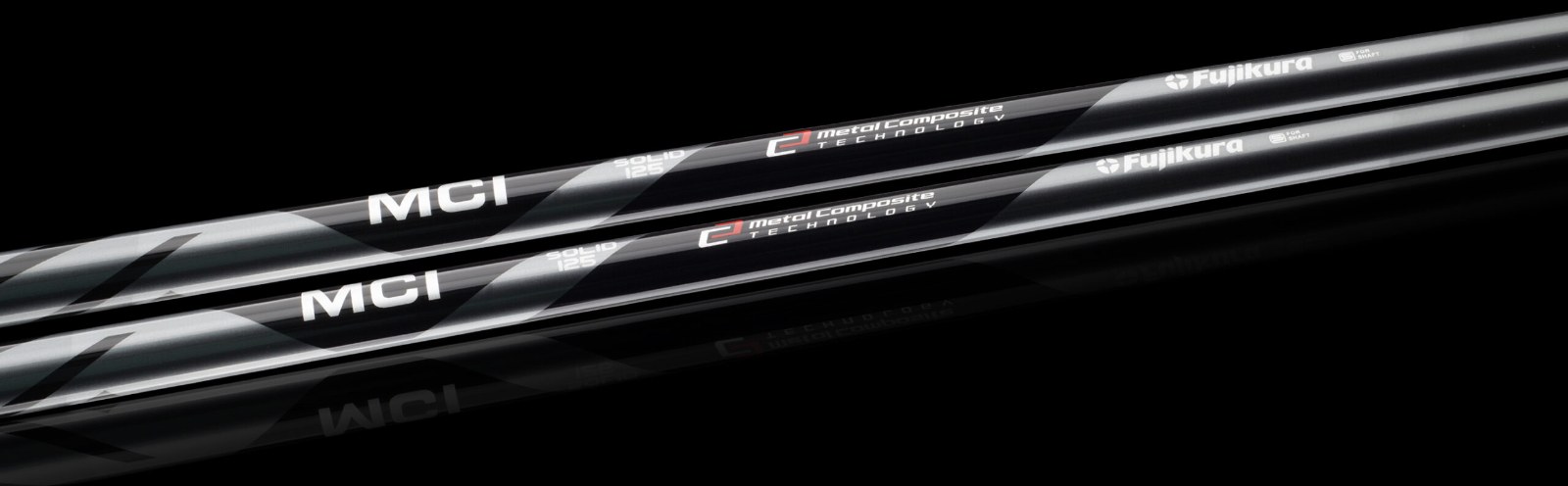
Fujikura’s MCI Wedge is a graphite shaft built specifically for wedges, using the company’s metal-composite construction. It comes in two weights, the 105 (108 grams) and the 125 (about 125 grams), and each comes in two versions: Solid, with a mid-high launch and spin, and Mild, with a mid launch and low-to-mid spin.
In Driving Range Heroes’ series on graphite wedge shafts, the MCI was the “easiest transition from steel” of the shafts they tried, with a slightly tighter, slightly lower flight and no dramatic change in spin. The reviewer also found vibration “pleasantly softened” compared with steel. They published no launch monitor numbers, so treat that as a reviewer’s verdict rather than data.
If you play True Temper’s SteelFiber graphite iron shafts, you can put the same shaft in your wedges instead. SteelFiber isn’t wedge-specific, but True Temper says its graphite composite core dampens vibration, and Amazon lists wedge versions of the i110 and i95.
Who It’s For
Golfers with graphite irons who want their wedges to match, without dropping to a light shaft.
Look Elsewhere If
You play steel irons. Steel is still the standard in wedges, and any of our steel picks will feel closer to your irons.
Specs
| Weight | 105: 108 g; 125: 124–125 g |
|---|---|
| Versions | Solid, Mild |
| Raw length | 35.5″ |
| Torque | 2.1–2.4° |
| Launch and spin (Fujikura) | Solid: mid-high launch and spin; Mild: mid launch, low-mid spin |
Pros
- Graphite designed specifically for wedges
- Steel-like weights
- Two spin profiles in each weight
- The easiest switch from steel in one reviewer’s series
Cons
- Not sold on Amazon
- Little independent data so far
Buying tip: Fujikura sells the MCI Wedge through its dealers and clubfitters rather than on Amazon, so the button opens its product page.
Also Worth a Look: BGT Silo Tour
Breakthrough Golf Technology’s Silo Tour is a premium wedge shaft that launched in April 2026. It comes in 90, 115 and 130 grams with a carbon tip, is built for the 8-iron through the lob wedge, and costs about $200 a shaft. BGT says not to tip-trim it.
Plugged In Golf found it lowered launch “measurably but not noticeably,” with slightly more spin and tighter dispersion. It’s one to try in a fitting before you buy.
Wedge Shafts Compared
Here’s how our seven picks line up on weight, flex options and each maker’s own launch and spin description. Prices are the maker’s list price for a single shaft, before fitting and installation.
| Shaft | Material | Weights | Flexes | Launch and spin (maker) | Maker price | Buy |
|---|---|---|---|---|---|---|
| Dynamic Gold Tour Issue S400Best overall | Steel | 132 g (X100: 130 g) | S400, X100 | Not published | $46.99 chrome; $51.99 Onyx | Amazon |
| KBS Hi-Rev 2.0 WedgeSpin and higher launch | Steel | 115, 125, 135 g | R, S, X | Higher launch, added spin | $45.95 chrome; $64.95 black gloss | Amazon |
| KBS 610 WedgeLow flight and control | Steel | 110, 115, 120, 125 g | R, R+, S, S+ | Lower, more penetrating flight; controlled spin | $45.95 chrome; $64.95 black gloss | Amazon |
| Dynamic Gold SpinnerDedicated wedge flex | Steel | 128 g | Wedge | Maximum spin and control around the greens | $46.99 | Amazon |
| Project X WedgeProject X iron players | Steel | 115, 120, 125 g | 5.5, 6.0, 6.5 | Low-to-mid launch | $48.99 | Amazon |
| Nippon N.S. Pro Modus3 WedgeModus3 and lighter steel irons | Steel | 111, 122, 133 g | Wedge 105, 115, 125 | Low trajectory, less variable spin | Not listed | Amazon (115) |
| Fujikura MCI WedgeGraphite | Graphite | 108 g or 124–125 g | 105 and 125, each in Solid or Mild | Solid: mid-high launch and spin; Mild: mid launch, low-mid spin | Not listed | Fujikura |
KBS Wedge Shafts Compared: Wedge vs. Hi-Rev 2.0 vs. 610 vs. Tour-V
KBS’s standard wedge range has four steel shafts (it also sells limited-edition finishes), and two of them are in our picks. All four have a .355-inch tip, come 37 inches long and are made for the pitching wedge through the lob wedge. Here’s how they differ, in KBS’s own words.
| Shaft | Weights | Butt | Flight and spin (KBS) | Maker price |
|---|---|---|---|---|
| KBS Wedge | R: 110 g; S: 120 g; X: 130 g | .600″ | Firmer tip for “less ball spin and increased control” | $45.95 |
| KBS Hi-Rev 2.0 Wedge | R: 115 g; S: 125 g; X: 135 g | .600″ | Higher launch, more spin | $45.95 chrome; $64.95 black gloss |
| KBS 610 Wedge | R: 110 g; R+: 115 g; S: 120 g; S+: 125 g | .610″ | Lower, more penetrating flight; controlled spin | $45.95 chrome; $64.95 black gloss |
| KBS Tour-V Wedge | S+: 125 g only | .600″ | Lower-mid trajectory, mid spin | $52.95 |
The Hi-Rev 2.0 is the outlier. When Today’s Golfer had its test pro hit four KBS shafts (the Tour, 610, Hi-Rev 2.0 and Tour-V) in the same 52-degree wedge, the Hi-Rev 2.0 produced the most spin and the highest launch, and the magazine suggested it for sand and lob wedges, where stopping power matters most. The tester could barely feel a difference between the four.
The other three trade spin for control. KBS says the plain KBS Wedge is for players who want a feel similar to its KBS Tour iron shaft, the 610 is for knockdowns and other workable shots, and the Tour-V produces a piercing flight with tight dispersion. The Tour-V comes only in stiff-plus, and Today’s Golfer said it’s unlikely to suit an average club golfer. The KBS Wedge isn’t listed on Amazon and the Tour-V comes in a single flex, so neither made our picks, but both are worth trying in a fitting if you play KBS irons.
How We Chose These Wedge Shafts
I’ve played two of these shafts myself, the Dynamic Gold Spinner and the Black Onyx Dynamic Gold Tour Issue S400, and my notes on them appear in their reviews. We chose the rest through in-depth research and our experience evaluating golf equipment. For every shaft, we:
- checked that it’s a current model and confirmed its weights, flexes and launch and spin descriptions on the maker’s own spec pages;
- read independent tests and reviews, including Plugged In Golf, Today’s Golfer, Golfmagic and Driving Range Heroes, plus owner feedback, including the complaints;
- looked at which shafts tour players and wedge makers actually use;
- checked that each Amazon listing we link to sells the named shaft in the flex shown and was in stock when we checked.
To make our list, a shaft had to be designed for wedges or proven in them, be current and sold new, and fill a role our other picks don’t. Together, the picks also had to cover every kind of iron shaft, from tour-weight steel to graphite, so you can follow our guide to matching your irons.
That ruled out some well-known names. BGT’s ZNE wedge shafts have been discontinued, Mitsubishi’s MMT Scoring Wedge is sold out at the maker, and UST’s TSPX wedge shafts are sold only through TSPX fitters. We also skipped cheap Amazon listings for shafts of unclear origin, which are often pulls from stock wedges.
How to Choose a Wedge Shaft: Weight, Material and Length
Our wedge shaft selector covers the big decisions. These are the fitting details that decide whether a shaft works once it’s in your wedge.
How Heavy Should Wedge Shafts Be?
Weight matters more than the flex label. A wedge shaft much lighter than your iron shafts can make your tempo quick on full swings, while one much heavier can feel sluggish.
Start with the weight of your iron shafts. A common rule of thumb is to match them in your pitching and gap wedges and go a few grams heavier in your sand and lob wedges, where a heavier shaft helps you feel the clubhead on short, slow swings. Some sources go further: Today’s Golfer suggests wedge shafts 10 to 20 grams heavier than your iron shafts, and Golf Monthly notes that tour players prefer “heavier, but softer, shafts in their wedges.” Treat these as starting points for a fitting rather than fixed rules.
Here’s what each shaft in our list weighs, alongside the most common Dynamic Gold wedge shafts:
| Shaft | Weight |
|---|---|
| Dynamic Gold 105 (Vokey’s lightweight “Wedge” flex) | 101 g |
| Fujikura MCI Wedge | 105: 108 g; 125: 124–125 g |
| KBS 610 Wedge | 110, 115, 120 or 125 g |
| Nippon N.S. Pro Modus3 Wedge | 111, 122 or 133 g |
| Project X Wedge | 115, 120 or 125 g |
| KBS Hi-Rev 2.0 Wedge | 115, 125 or 135 g |
| Dynamic Gold S200 / S300 | 127 g / 130 g |
| Dynamic Gold Spinner | 128 g |
| Dynamic Gold Tour Issue S400 / X100 | 132 g / 130 g |
For my own game, I play a standard weight and regular flex through the bag. My reasoning is simple: consistency. It allows me to produce consistent spin, launch and feel, and as an amateur mid-handicap golfer, that’s what I need.
Steel or Graphite Wedge Shafts?
Steel is still the standard in wedges. Every wedge in our stock-shaft table comes with steel as standard, and graphite is an option or a custom order.
Graphite makes the most sense if you play graphite irons and want your wedges to feel the same, or if you want to reduce vibration in your hands, wrists or elbows. Tour players have tried it too: Bryson DeChambeau switched to LA Golf graphite wedge shafts in 2019.
You don’t have to go light to get graphite. Wedge-specific graphite like the Fujikura MCI Wedge comes in steel-like weights of about 108 to 125 grams. For more on the trade-offs, see our guide to graphite vs. steel shafts.
Wedge Shaft Length and Tip Size
Wedge shafts are sold long and cut to fit. Most of the steel shafts in our list come 36.5 to 37 inches long before trimming, and the MCI Wedge comes at 35.5 inches. Finished wedges are shorter: Titleist’s standard Vokey SM11 lengths are 35.75 inches for pitching-wedge lofts (44 to 48 degrees), 35.5 for gap wedges (50 to 52), 35.25 for sand wedges (54 to 56) and 35 for lob wedges (58 to 60). If you’re much taller or shorter than average, a fitter can adjust from there, and our guide on how to measure golf club length shows how to check yours.
Check the tip size too. Wedge hosels take either a .355-inch taper tip or a .370-inch parallel tip. The tip sizes published for our picks are all .355-inch taper, so if your wedge takes a parallel tip, you’ll need a parallel-tip shaft or a shim fitted by your clubmaker. Changing length or shaft weight also changes swing weight, so have a clubmaker check it when you reshaft.
Follow this video from Elite Fit Golf / Mobile Clubmaker if you want to cut the golf shaft yourself. Personally, I recommend visiting your local club fitter for precise results. Our step-by-step guide on how to reshaft a golf club covers the rest of the job.
Buying Wedge Shafts on Amazon
Wedge shafts on Amazon are sold by third-party component shops and clubfitters, not by the shaft makers. Before you order, check that the listing title names the exact model, flex and tip size you want, and check the label when the shaft arrives. Skip very cheap listings with names the maker doesn’t use; they’re often shafts pulled from stock wedges. Black finishes look sharp but can chip with heavy use. Warranty and returns run through the seller, so read its policy before you buy.
Do Wedge Shafts Make a Difference?
Yes, for golfers who make solid contact. The clearest evidence comes from Plugged In Golf’s wedge shaft test, in which five above-average players (handicaps from +2 to 10) hit six wedge shafts in the same 56-degree head, with full and partial swings, at Club Champion:
- Spin: on partial shots, all but one tester saw a gap of at least 1,500 rpm between their highest- and lowest-spinning shafts, and the gap on full swings averaged 1,800 rpm.
- Launch: each player’s highest- and lowest-launching shafts were just over 2 degrees apart on average, and up to 4 degrees apart.
- Accuracy: the best players roughly halved their side-to-side dispersion on partial shots with the right shaft.
- Feel: every tester was sure which shaft performed best, and “not one was correct.”
No single shaft won for everyone, either. One tester’s highest-spinning shaft was another’s lowest, and a shaft’s results on full swings didn’t predict how it did on partial shots. That’s why our selector chooses each wedge’s shaft by how you use that wedge.
What a shaft can’t do is fix poor contact. Plugged In Golf’s own conclusion is that strike quality matters more than spin-focused equipment, so if you’re catching wedges thin or fat, lessons or a wedge with the right bounce for your swing will help more than a new shaft. Once your contact is solid, our wedge distance chart can help you check your gapping.
Should You Get Fitted?
If you’re paying for new shafts, a wedge fitting is worth it. Plugged In Golf recommends a neutral fitter over your own preference, since none of its testers picked their best shaft by feel. Test both full and partial swings on a launch monitor, because a shaft can perform differently on each. If a fitting isn’t practical, use our guide to matching your irons and change one wedge first, usually the sand or lob wedge, before you change the set.
Why You Should Trust Us
Our team spends thousands of hours trying out and researching golf equipment to help you take your game to the next level. Here’s our product review process.
We can bring these reviews to you through the small commissions we earn if you buy through the links in this article.
Wedge Shaft FAQs
What wedge shaft do most pros use?
True Temper Dynamic Gold Tour Issue, usually in S400: Golf Monthly reported in February 2026 that every PGA Tour winner that season so far had it in their wedges, and called the S400 “the most used in the wedges on the professional circuits.” Scottie Scheffler plays S400 in all of his wedges, while Rory McIlroy uses a Project X 6.5 Wedge shaft in his 60-degree wedge.
What flex is Vokey wedge flex?
Titleist’s standard steel shaft in Vokey SM11 wedges is Dynamic Gold S200, a stiff flex of about 128 grams, while the shaft it labels “Wedge” flex is its lightweight Dynamic Gold 105 at 101 grams. Other brands use “wedge flex” for different shafts, so see our brand-by-brand table.
Is S200 stiff or regular?
S200 is a stiff flex, the softest and lightest of Dynamic Gold’s three stiff options (True Temper lists S200, S300 and S400 at 127, 130 and 132 grams). It’s the stock steel shaft in Vokey SM11 and Callaway Opus SP wedges; see S200 vs. S300 vs. S400 in wedges.
Should wedge shafts be heavier than iron shafts?
Usually the same or slightly heavier: a common starting point is to match your iron shafts in the pitching and gap wedges and go a few grams heavier in the sand and lob wedges, though Today’s Golfer suggests 10 to 20 grams heavier. Treat any rule as a starting point for a fitting, and see our wedge shaft weight table.
Are wedge shafts stiffer than iron shafts?
Not as a rule, because wedge flex isn’t standardized: True Temper says the Project X Wedge plays about 10 cpm softer than a Project X iron shaft with the same number, while reviewers describe the KBS 610 as firm. Compare shafts by weight and the maker’s launch and spin description rather than the flex label.
Should I put graphite shafts in my wedges?
If you play graphite irons, yes, at least in your gap wedge, and wedge-specific graphite like the Fujikura MCI Wedge comes in steel-like weights of 108 to 125 grams. If you play steel irons without sore hands, wrists or elbows, steel is still the standard.
What is the best wedge shaft for seniors or high handicappers?
There isn’t one best shaft, so start with the stock shaft in a new wedge or one that matches the weight of your iron shafts. If you swing slower or play lighter irons, look at lighter options such as the Modus3 Wedge 105 (111 grams), KBS 610 R (110 grams) or Fujikura MCI Wedge 105 (108 grams) rather than tour-weight shafts like the S400.
Can you reshaft a wedge?
Yes, as long as the new shaft’s tip suits your wedge’s hosel, but it’s only worth it when the heads are in good shape; if your grooves are worn and your spin has dropped, new wedges with your preferred shaft usually make more sense. Our guides to how to reshaft a golf club and the cost of reshafting irons explain what’s involved.
Final Thoughts
The best wedge shaft is usually the one that matches your irons, adjusted for how you use each wedge and the flight you want. Match the weight of your iron shafts first, choose for feel in the wedges you mostly chip and pitch with, then go firmer or more active to fix your flight.
If you play heavy steel, start with the Dynamic Gold Tour Issue S400, the tour favorite. For more height and spin, try the KBS Hi-Rev 2.0; to flight it down, the KBS 610. The Dynamic Gold Spinner gives you a dedicated wedge flex, and Project X iron players have the Project X Wedge. Golfers with Modus3 or lighter steel irons will find an easier match in the Nippon Modus3 Wedge, and graphite iron players should look at the Fujikura MCI Wedge.
If you’re unsure, change one wedge first, usually the sand or lob wedge, before you reshaft the set.
Read More:
- Best Iron Shafts: Steel & Graphite Picks
- The Best Sand Wedges
- The Best Gap Wedges
- The Best Lob Wedges: Increase Height & Spin!
- The Best Wedges for Women

Matt has played golf since he was 4 years old and has written over 150 articles at GolfSpan since 2021. Matt specializes in product reviews using his postgraduate degree in Sports Marketing from Johan Cruyff Institute. Matt has a handicap index of 10.8 and currently plays weekly at Pilar Golf Course near his home in Buenos Aires, Argentina. He also loves his Callaway Odyssey Exo Rossie putter and likes a pepper steak pie with curry gravy at the turn. You can connect with him on LinkedIn.