The 8 Best Graphite Iron Shafts in 2026
By Matt Callcott-Stevens · Last updated: [publish date]
We may earn a commission when you buy through links on this page.
For decades, graphite iron shafts had a stigma: they were only for seniors or golfers with slow swing speeds. That idea is out of date. Some graphite shafts for irons now weigh as much as tour steel, and Brandt Snedeker won on the PGA Tour in 2026 with graphite in his irons.
Graphite also does a lot for everyday golfers. A lighter shaft can help you add clubhead speed and launch the ball higher, and graphite dampens the sting of a thin strike better than steel. Below, we break down the 8 best graphite iron shafts to help you launch it higher, carry it farther and hit it more consistently.
By the end of this post, you will know which graphite iron shafts are best for slow, moderate and high swing speeds. In addition, I introduce you to the top picks for seniors, ladies and mid to high handicappers. If you’re still weighing steel against graphite, our guide to the best iron shafts covers both.
So, which graphite iron shaft fits your swing? Start with the comparison chart below.
Updated for 2026: three new picks, current weights and flexes, plus new swing speed and steel-matching charts.
Graphite Iron Shafts Comparison Chart 2026
Here’s how the 8 best graphite iron shafts compare at a glance. Tap a name to jump to its review.
| Shaft | Best for | Weights | Flexes | Tip | Launch | Feel | Price |
|---|---|---|---|---|---|---|---|
| Fujikura Axiom | Best overall | 75 to 125g | R2 to X | .355 & .370 | Mid to mid-low | Medium | Check Price |
| KBS TGI | High swing speeds | 50 to 110g | Lite to X+ | .355 & .370 | Not listed | Firm | Check Price |
| Mitsubishi MMT | Switching from steel | 48 to 125g | L to TX | .355 & .370 | Mid to mid-low | Medium | Check Price |
| Aerotech SteelFiber i95 | Most versatile | 56 to 125g (i55 to i125) | L to X | .355 & .370 | High to mid-low (i95: mid) | Firm | Check Price |
| KBS PGI | Mid to high handicappers | 50 to 100g | Lite to X | .355 & .370 | Mid-high | Medium | Check Price |
| Fujikura PRO | Best value | 70 to 117g (65i to 115i) | R2 to Tour X | .370 | Mid to mid-low | Medium | Check Price |
| KBS MAX Graphite | Seniors | 45 to 85g | Lite to S | .355 & .370 | High | Soft | Check Price |
| Fujikura Vista Pro | Ladies | 49 to 75g (40i to 70i) | R3 to S | .370 | High to mid | Soft | Check Price |
Weights, flexes, tips and launch come from each maker’s spec sheet. “Not listed” means the maker doesn’t publish it. Feel is how golfers describe each shaft, not a lab number. A .355 tip is a taper tip and a .370 tip is a parallel tip, so match the one your iron heads take. Prices change daily, so they sit on the buttons, not here.
What the chart tells you
- Graphite now spans 45 to 125 grams. The light end (KBS MAX, Vista Pro) suits seniors and ladies who need help with launch, clubhead speed and distance. The heavy end overlaps with tour steel.
- Feel falls into three groups. Golfers tend to describe KBS MAX and Vista Pro as soft; Axiom, MMT, PGI and PRO as medium; and TGI and SteelFiber as firm. If you’re coming from stiff steel and hate a whippy feel, skip the soft group.
- Three shafts go up to 125 grams. Axiom, MMT and SteelFiber all come in 125-gram models, the same weight as Project X 6.5 steel, so stronger players can switch without the club feeling light.
Why You Should Trust Us
Our team spends thousands of hours researching golf equipment to help you take your game to the next level.
No brand paid to be on this list. If you buy through our links, we may earn a small commission at no extra cost to you, but it never decides which shafts make the cut.
For this 2026 update, every weight, flex and tip size comes straight from the maker’s spec sheet, and every pick was checked for stock with an established seller. When a shaft is discontinued, it comes off the list. You can see exactly how we choose and check gear on our product review process page.
How We Reviewed These Products
GolfSpan only shares equipment and brands we trust. I’m an experienced golfer of 28 years and I thoroughly researched and evaluated the products shared below.
To build this list, we looked at the top rated graphite iron shafts golfers and fitters talk about most, then narrowed it to 8. Here’s what we used:
- Maker spec sheets from KBS, Fujikura, Mitsubishi and True Temper for every weight, flex and tip size.
- Tour use in 2026: which graphite shafts PGA Tour players actually put in play, and won with.
- The stock shafts in 45 current iron models, so you know which graphite shafts the big club makers trust.
- Owner and fitter feedback from golf forums and video reviews from 2025 and 2026.
Then we judged each shaft on these criteria:
- Weight range: light enough for slow swings, heavy enough for fast ones.
- Flex and swing speed fit: clear flex options you can match to your speed.
- Launch and spin: the ball flight the maker built it for.
- Stability: how well it holds its line when you swing hard.
- Feel and vibration: how golfers who play it describe impact.
- Value: what you get for the money next to the other picks.
- Availability: in stock from an established seller, so you’re not gambling on a fake.
We don’t publish launch monitor numbers we didn’t collect. When you see a figure on this page, it comes from the maker.
The 8 Best Graphite Iron Shafts 2026
1. Fujikura Axiom – Best Overall Graphite Iron Shaft
Pros
- Four weights: 75 to 125 grams, from average to very fast swings.
- Stable: torque drops below 2 degrees in the 105 and 125.
- Fits most irons: .355 taper and .370 parallel tips.
- Smooth, not whippy: golfers describe it as smooth but stable.
Cons
- Premium price for a graphite iron shaft.
- Amazon only stocks the stiff 95, 105 and 125.
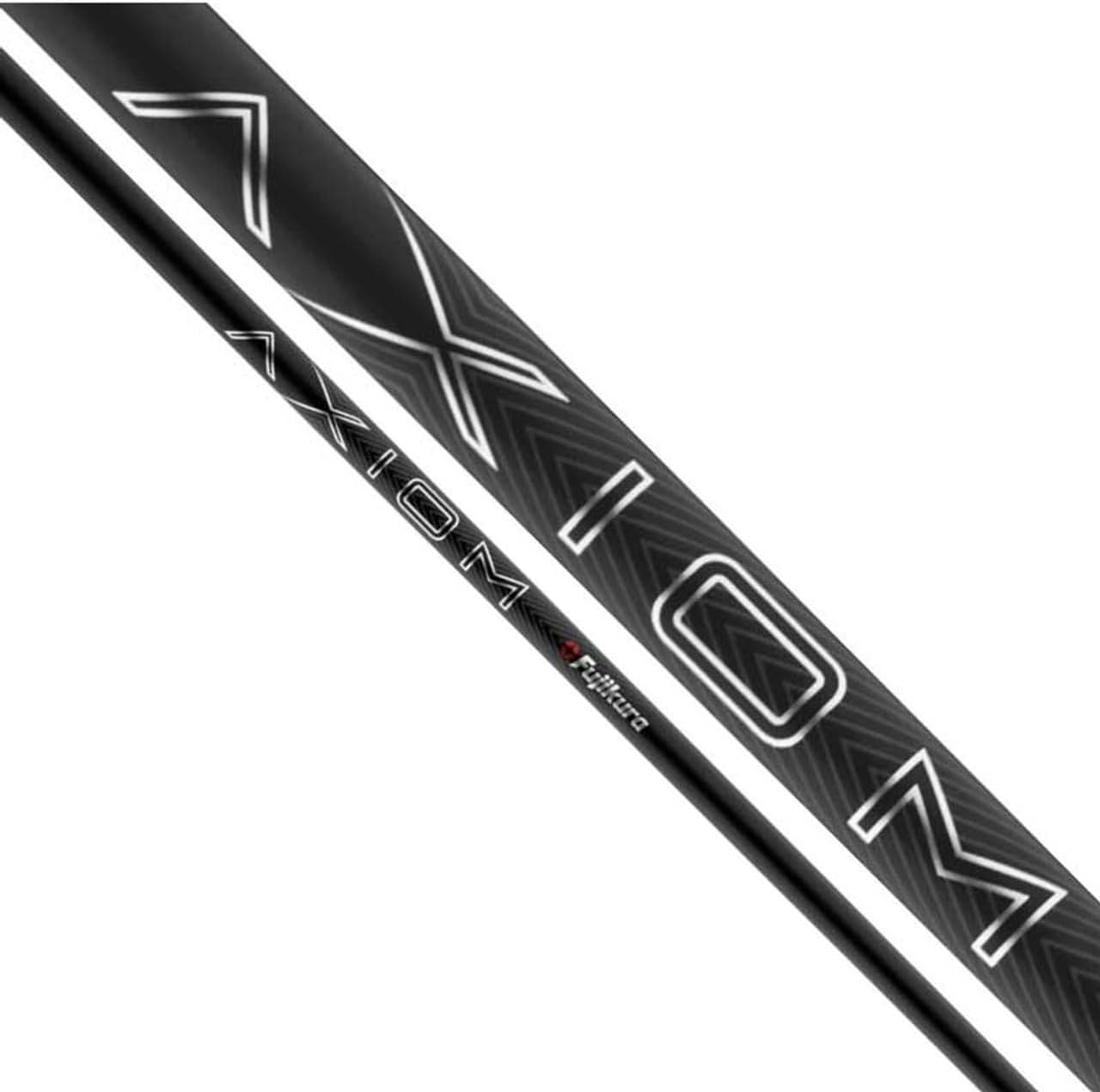
Many steel players avoid graphite for the same reason. They expect a whippy shaft that twists on mishits and hooks the ball left. If that sounds like you, the Fujikura Axiom is the graphite iron shaft to try first.
Fujikura built the Axiom around VeloCore, the core technology it first used in its Ventus wood shafts. Its job is to keep the shaft stable at impact. Fujikura also designed a three-part parallel set, so your long, mid and short irons each get their own profile at the same weight.
The result is a shaft that golfers describe as smooth in transition but stable through the ball. The 75 and 95 launch mid, while the 105 and 125 bring launch and spin down for players who balloon it. That mix of graphite speed and steel-like control is why the Axiom is our best graphite iron shaft overall.
The model number tells you roughly what each shaft weighs. In 2025, Fujikura added a mid-weight 95 and a 125 stiff, so there’s now a clear step for every speed. Choose the 75 or 95 for average swing speeds, and the 105 or 125 for fast swings or heavy steel. Not sure? Start by matching the weight of your current steel.
The Axiom suits low handicappers and golfers with high swing speeds who want graphite without giving up control. It’s an upgrade rather than a stock shaft in any of the current irons we checked, so ask for it when you order new irons or reshaft. VeloCore started in Fujikura’s wood shafts, which we cover in our guide to the best driver shafts.
Skip it if: you want the most shaft for the least money. The Fujikura PRO is our value pick.
Note: The UST Dart V is the other players’ graphite shaft golfers often compare with the Axiom. It isn’t sold on Amazon, so you’d buy it through a fitter or club builder.
2. KBS TGI – Best Graphite Iron Shaft for High Swing Speeds
Pros
- Built to play like steel: KBS designed it to match its steel shafts.
- Big weight ladder: 50 to 110 grams, with seven weights in the taper tip.
- Heavy options: 95, 100 and 110 grams for fast swings.
- Easy to fit: each flex comes at its own weight.
Cons
- Too firm for some slower swings.
- The .370 parallel tip stops at 80 grams.
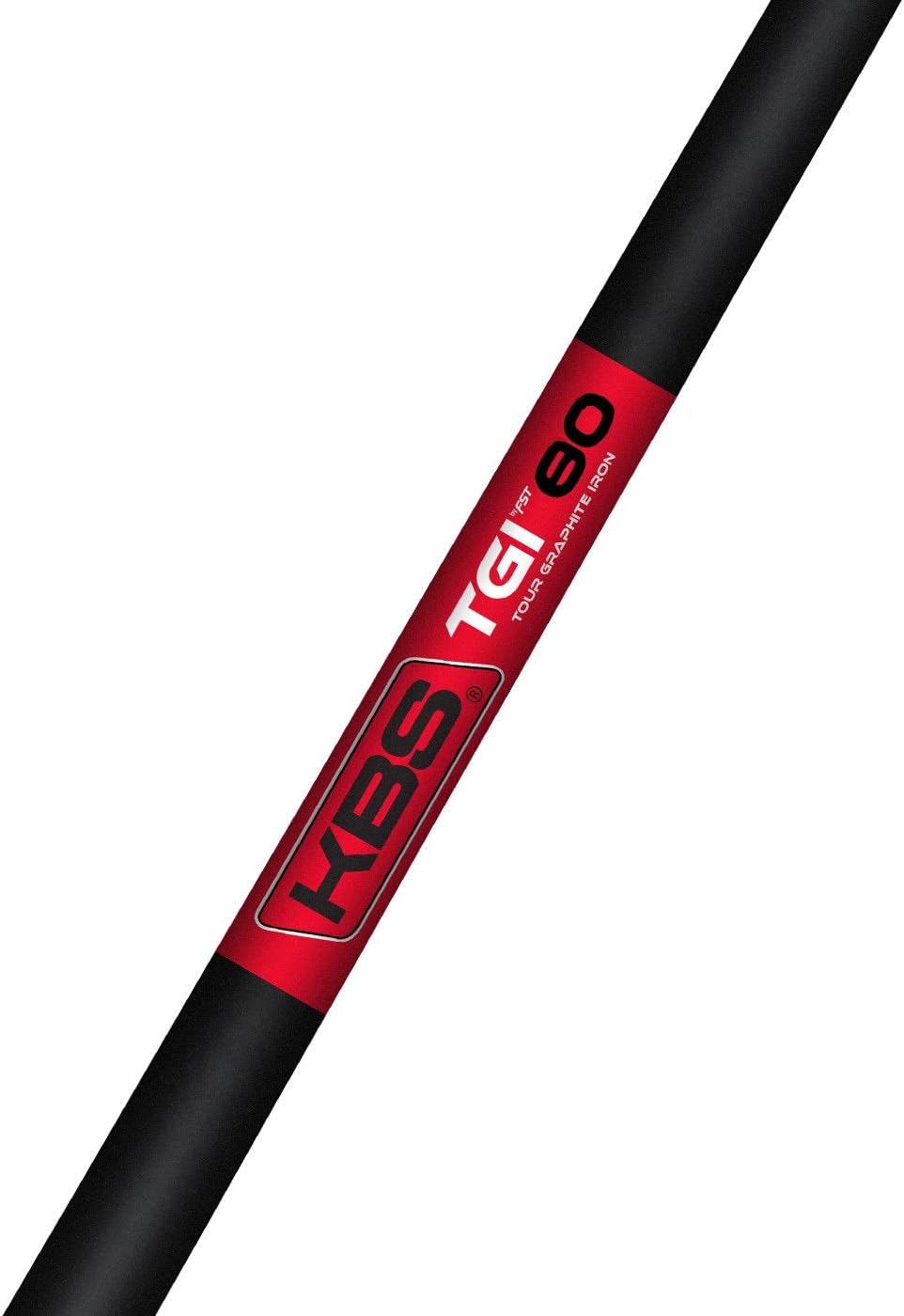
You swing fast, you like the solid feel of steel and you’re curious about graphite. The problem is that most graphite shafts feel too soft at your speed. The KBS TGI is built for exactly that golfer.
KBS calls the TGI the first graphite shaft to play like KBS steel. To get there, KBS ties every flex to its own weight. In the taper tip, that runs from a 60-gram regular up to a 110-gram X+, so the stiffer you go, the heavier the shaft gets.
The result is one of the firmer graphite shafts you can buy. Golfers who switch describe it as firmer than the MMT, yet it still takes some of the sting out of thin strikes. If your biggest fear about graphite is a soft, whippy feel, the TGI is the cure.
Pick your weight from your speed and your current steel. Fast swingers coming from 120-gram steel should look at the 95, 100 or 110. The 70 and 80 are the mid-weight options, and the 80 stiff is the version we link to. Keep in mind the .370 parallel tip only comes in 50 to 80 grams, so heavier builds need a .355 taper hosel.
The TGI suits high swing speeds and better players who already play KBS steel and want graphite without losing that feel. It’s also a strong match for low handicappers building a new set, so see our picks for the best low handicap irons. Plus, popular shafts attract fakes, so buy from an established component seller.
Skip it if: you want a soft kick that helps the ball up. The KBS PGI or KBS MAX Graphite will suit you better.
Note: Slower swinger who still likes a firm shaft? The 50- and 60-gram TGI are a firmer option than the KBS MAX Graphite.
3. Mitsubishi MMT – Best for Switching from Steel
Pros
- Steel mesh tip: braided stainless steel adds stability where it counts.
- Huge range: 48 to 125 grams across two tip sizes.
- Trusted by club makers: stock in 11 of the 45 current irons we checked.
- Smooth feel: golfers describe it as smooth and consistent.
Cons
- Built for a mid flight, not maximum launch.
- The 105 and 125 only come in the .355 taper tip.
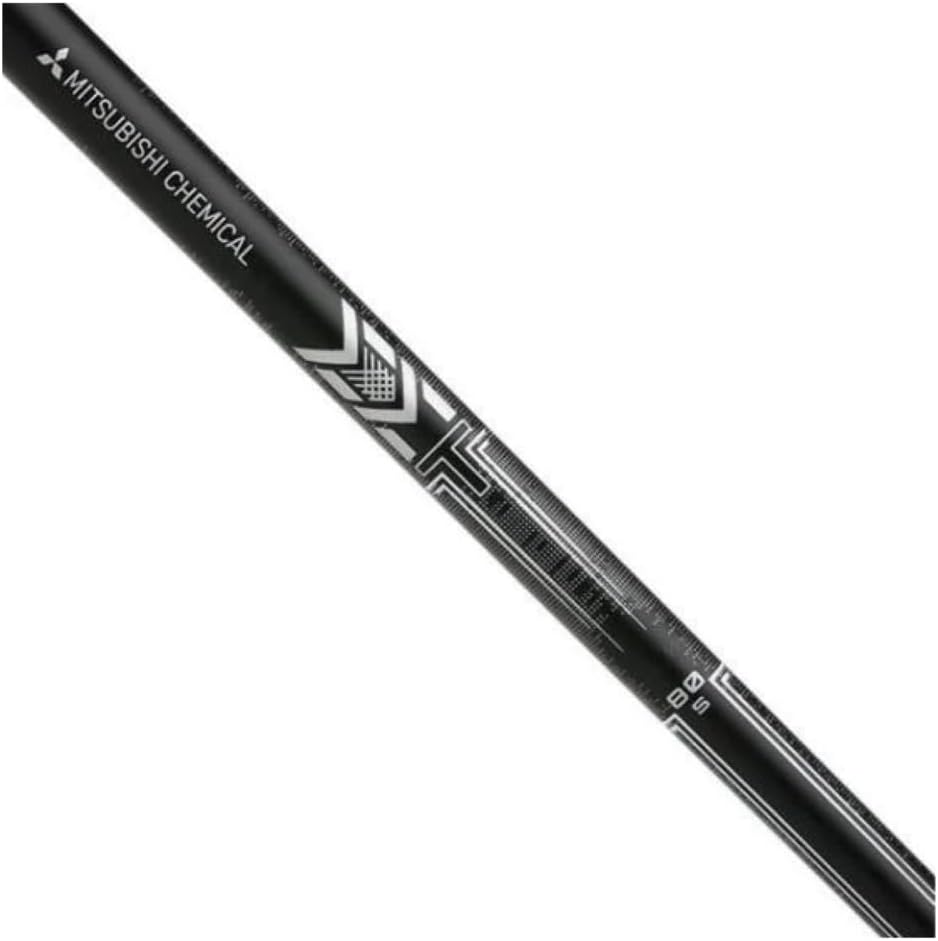
You’ve played steel for years and your irons feel right. You want the comfort of graphite, but you don’t want to relearn your swing or your yardages. The Mitsubishi MMT is built for exactly that move.
MMT stands for Metal Mesh Technology. Mitsubishi braids strands of stainless steel into a mesh and places it toward the tip as it builds the core. Mitsubishi says the mesh adds density and stability, which lets it use thinner graphite walls.
The result is a shaft Mitsubishi aims at golfers who want a straighter flight and more consistent strikes. Mitsubishi rates the taper version mid to low for launch and spin, so the ball stays down instead of ballooning. If you want graphite that still feels familiar to a steel player, start here.
Next, choose your weight. Start with the MMT closest to the steel you play now, then go one step lighter if you want more speed. The taper version runs from 59 to 125 grams, with the 105 and 125 for fast swings. If you play regular flex steel, the 65 R and 85 R are the regular options in the taper line. The parallel version runs from 48 to 98 grams.
The MMT suits mid handicappers and better players moving from steel. Club makers clearly trust it, too. It’s a stock graphite option in 11 of the 45 current iron models we checked, including Titleist’s T-Series and the TaylorMade P790. Still deciding? Read our guide to graphite vs steel iron shafts.
Skip it if: you need maximum launch from a slow swing. The KBS MAX Graphite gets the ball up more easily.
Note: If your current irons came with graphite, there’s a good chance it’s an MMT or a UST Recoil Dart. They’re the two most common stock graphite shafts in the irons we checked.
4. Aerotech SteelFiber i95 – Most Versatile
Pros
- Every speed covered: six weights, from the i55 to the i125.
- Both tips: .370 parallel or .355 taper (CW).
- Steel-like stability: steel fibers wrap the graphite core.
- Tour winner: in Brandt Snedeker’s irons for his 2026 win.
Cons
- Plays a little firm for its flex.
- Model names (i, CW, FC) can be confusing.
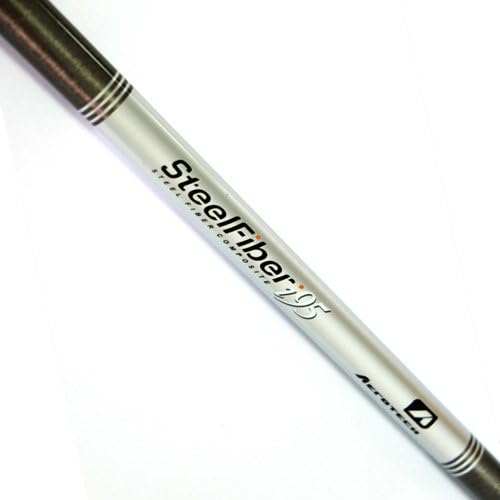
Not sure which weight or flex you need yet? Or want one shaft family that works whether your swing is slow, average or fast? That’s why the Aerotech SteelFiber is the most versatile pick on this list.
Aerotech wraps a graphite core in a layer of fine steel fibers, which is where the name comes from. True Temper, which owns Aerotech, says the idea is to pair the power of graphite with the stability of steel. It then builds the line in six weights, each in a parallel and a taper tip.
The result is a shaft golfers describe as solid and crisp, closer to steel than most graphite. Launch steps down as the weight goes up, from high in the i55 to mid in the i95 and mid-low in the i110 and i125. Pick the weight for your speed and SteelFiber gives you a matching flight, from easy launch for slow swings to a flatter flight for fast ones.
Our link goes to the i95, which sits in the middle of the range for average to fast swings. Slower swingers should look at the i55 or i70, while fast swingers can step up to the i110 or i125. Some golfers find it plays a little firm, so if you’re between two flexes, take the softer one.
SteelFiber suits golfers who want one family for the whole set, and better players who want graphite that feels close to steel. It has tour proof, too. Brandt Snedeker won on the PGA Tour in May 2026 with SteelFiber i95cw in his irons, and Matt Kuchar plays the heavier i110cw. See how many pros use graphite iron shafts today.
Skip it if: you have a slow, smooth swing and want a soft kick. The KBS MAX Graphite will feel friendlier.
Note: Want a higher flight in your long irons? SteelFiber FC (Flight Control) uses a softer tip to launch the mid and long irons higher, while keeping the standard flight in your scoring clubs.
5. KBS PGI – Best for Mid to High Handicappers
Pros
- Higher flight: KBS rates it mid to high for launch and spin.
- Wide range: 50 to 100 grams in 10-gram steps.
- Built for forgiving irons: stock graphite in the Srixon ZXiR and Cobra King Max.
- Middle-ground feel: firmer than the KBS MAX, softer than the TGI.
Cons
- The higher flight can balloon in the wind.
- The .355 taper tip only comes in 70 to 90 grams.
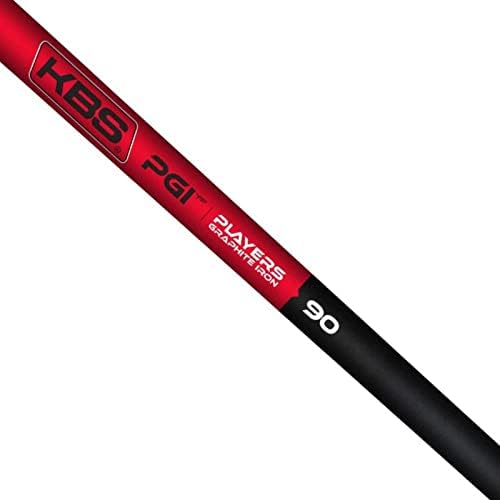
You’re a mid or high handicapper. You want the ball in the air and stopping on the green, but light senior shafts feel too whippy for your swing. The KBS PGI sits right in that gap.
KBS calls it the Players Graphite Iron, yet it built the PGI for everyone from beginners to tour players. KBS gave it a mid kick point and rates it mid to high for launch and spin. It then offers the shaft in 10-gram steps, from 50 grams up to 100.
The result is a higher flight that lands softer than you’d get from a firmer players shaft, so your approach shots hold more greens. Golfers who play it place its feel between the soft KBS MAX and the firm TGI. If you want more height and stopping power without a whippy feel, the PGI is the pick.
The 70 and 80 cover the mid-weight range, and the box above shows the 80 stiff. Slower swingers can drop to the 50 or 60, while faster swings suit the 90 or 100. Check your hosel first, because the .355 taper tip only comes in 70, 80 and 90 grams.
Club makers clearly see the PGI as a game improvement shaft. It’s the stock graphite in the Srixon ZXiR and Cobra King Max, two irons built for forgiveness. That’s why it’s our pick among the best graphite iron shafts for mid handicappers, and it works for high handicappers, too. Pair it with one of the best irons for high handicappers.
Skip it if: you already hit the ball high and fight ballooning in the wind. The Mitsubishi MMT keeps the flight lower.
6. Fujikura PRO – Best Value Graphite Iron Shaft
Pros
- Strong value: Fujikura quality for much less than the Axiom.
- Five weights: 65i to 115i, about 70 to 117 grams.
- Tour versions: firmer 95i and 115i Tour for fast swings.
- Full sets on Amazon: buy the whole set in one order.
Cons
- Older design than the Axiom.
- X flex only comes in the Tour versions.
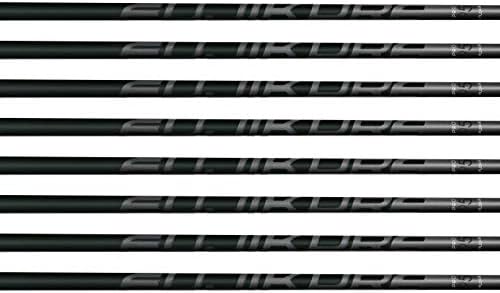
Reshafting a full set of irons adds up fast, especially with premium graphite. If you want a proven Fujikura without paying for the newest tech, the Fujikura PRO is the smart buy.
Fujikura builds the PRO around what it calls a High Density Composite Core. Fujikura says the core lets you hit normal swing weights at steel length, which is a common headache with light graphite. It also sells the PRO as one-length blanks, so a fitter can soft or hard step them to land between flexes.
The result is a mid launch, mid spin shaft in the standard models, while the Tour versions bring launch and spin down a notch. Torque sits around 3 degrees in the standard models and drops to 2.3 in the 115i Tour X. For the money, it’s one of the best graphite shafts for irons you can buy.
There are five weights to choose from. The 65i and 75i suit slower and average swings, while the 85i and 95i suit average to faster swings. Fast swingers should go for the 95i or 115i Tour, which add stiff and X flexes with tighter torque. The 95i set is the one we link to, and a 115i set is on Amazon too.
The PRO suits golfers reshafting a whole set on a budget, and anyone who wants Fujikura’s quality without the premium. That makes it our pick among the best budget graphite iron shafts. Before you order, check our guide to the cost of reshafting irons so you can plan the full job.
Skip it if: you want the newest tech and the lowest torque. The Fujikura Axiom is the upgrade.
7. KBS MAX Graphite – Best Graphite Iron Shaft for Seniors
Pros
- Easy launch: KBS built it for higher launch and spin at slower speeds.
- Lightweight: options from 45 to 85 grams.
- Fitted by speed: KBS sizes it by swing speed, not flex labels.
- Trusted in senior irons: stock in the Srixon ZXiR HL and Wilson DYNAPWR Max.
Cons
- Too soft for fast or aggressive swings.
- The extra spin can balloon in the wind.
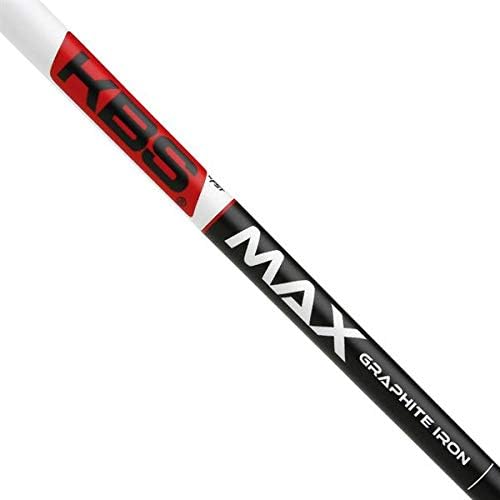
As your swing speed drops, your irons start coming off low and short. You don’t need a new swing. You need a shaft that does more of the work, and that’s why the KBS MAX Graphite is our pick among the best graphite iron shafts for seniors.
KBS designed it with the same stiffness profile as its KBS MAX steel shaft, then built it in lightweight graphite. KBS also fits it by swing speed instead of a traditional flex label. That helps, because one brand’s regular can play like another brand’s senior.
The result, KBS says, is a higher launch and more spin for golfers with lower swing speeds. That extra height helps you gain carry distance and land the ball softer on the green. If your iron shots have started to fly low and run out, this is the shaft to try first.
Looking for senior flex graphite shafts for irons? Start with the 55-gram A flex shown above. If you have a very slow swing speed, drop to the 45-gram Lite. Stronger seniors can move up to the 65 R, or to the 75 R+ and 85 S in the .370 parallel tip.
The MAX Graphite suits seniors and anyone whose speed has dropped, from high handicappers to former single-digit players. Club makers agree, since it’s the stock graphite in the Srixon ZXiR HL and Wilson DYNAPWR Max, two irons built for slower swings. Not sure which flex you need? Read our guide to what senior flex means.
Skip it if: you swing fast or already hit the ball high. It’s one of the softest shafts on this list, so look at the KBS PGI instead.
8. Fujikura Vista Pro – Best Graphite Iron Shaft for Ladies
Pros
- Very light: 40i to 70i, about 49 to 75 grams.
- High launch: Fujikura rates the 40i to 60i high for launch and spin.
- Ladies and senior flexes: R3 and R2 options in the lighter models.
- Easy to buy: ladies sets in stock on Amazon.
Cons
- Too light for faster swings.
- Fujikura’s R3 and R2 labels can confuse first-time buyers.
If you’re a lady golfer with a smooth, unhurried swing, a heavy shaft robs you of height and carry. You need something light enough to swing freely that still gets the ball up. That’s the job of the Fujikura Vista Pro.
Fujikura built the Vista Pro as a flighted line, and it still sells the 2021 redesign today. The lightest models get a low bend point for a high launch, and the flight comes down as the weight goes up. Fujikura also uses a Phantium paint finish that it says saves up to 6 grams.
The result is a high launch with plenty of spin in the 40i, 50i and 60i, which adds carry distance and helps the ball stop on the green. The 70i settles into a mid flight for stronger players. Light, easy to swing and built to launch, it’s our top pick for ladies.
Fujikura’s flex labels take a moment to decode. R3 is its ladies flex and R2 is its senior flex. The 50i ladies set shown above is a good place to start. Go to the 40i, one of the lightest graphite iron shafts on our list, for maximum launch, or the 60i and 70i if you swing faster.
The Vista Pro suits ladies and senior ladies who want lightweight graphite iron shafts that launch high. It’s also a smart upgrade for a boxed set with basic stock shafts. For complete sets built around light shafts, see our picks for the best golf clubs for senior ladies.
Skip it if: you swing fast enough to need more than 75 grams. Move up to the KBS PGI or KBS TGI.
Who Should Play Graphite Iron Shafts?
Graphite isn’t just for seniors anymore. Your swing speed, your comfort and the feel you like decide whether it’s right for you. Look at graphite if:
- Your swing speed has dropped and your irons are losing distance.
- Your long irons won’t get the ball airborne.
- Your elbows, wrists or shoulders feel sore after a round.
- The club starts to feel heavy on the back nine.
- Thin strikes sting your hands, especially in cold weather.
Strong players aren’t left out, either. Heavier models like the Axiom 125 and TGI 110 suit fast swingers who want less sting at impact. Seniors who’d rather replace the whole set can see our picks for the best golf club sets for seniors.
Are Graphite Shafts Easier on Your Joints?
For most golfers, they feel easier. Graphite dampens vibration better than steel, so less of the shock from a mishit travels into your hands, wrists and elbows. That’s the main reason many golfers with sore joints make the switch. A lighter shaft also takes less effort to swing over 18 holes.
Keep your expectations realistic, though. A new shaft won’t fix an injury, so if pain sticks around, see a doctor before you change your gear. For the full comparison, read our guide to graphite vs steel shafts.
The Downsides: Who Should Stick with Steel
Graphite isn’t the right call for everyone. These are the main disadvantages of graphite iron shafts:
- Cost: graphite usually costs more per shaft than steel, and reshafting adds labor on top.
- Going too light: fitters say dropping too much weight is a common mistake, and it can cost you control and widen your dispersion.
- Less feedback: some better players miss the crisp feel of steel that tells them exactly where they struck it.
If you swing fast, control your flight and love your steel, there’s no reason to switch. Nearly every PGA Tour winner in 2026 played steel, and Bryson DeChambeau moved from graphite back to steel irons in 2026.
How to Reshaft Your Irons with Graphite (Don’t Ruin Your Clubs)
Swapping steel for graphite isn’t just pulling one shaft and gluing in another. Get three things right (weight, swing weight and tip size) and your irons will still feel like yours. Get them wrong and they can feel like someone else’s clubs.
Match the Weight of Your Old Steel
Fitters say going too light is one of the most common mistakes golfers make when they switch. Start with a graphite shaft close to the weight of the steel you play now, then go lighter only if a fitter agrees.
| If you play this steel | It weighs about | Start with this graphite |
|---|---|---|
| True Temper Dynamic Gold (S300 / X100) | 130g | Axiom 125 · MMT 125 · SteelFiber i125 |
| Project X LZ or KBS Tour | 110 to 130g | Axiom 105 or 125 · TGI 110 · SteelFiber i110 · PRO 115i Tour |
| Nippon Modus3 Tour 105 | 103 to 112g | Axiom 105 · MMT 105 · TGI 100 or 110 · SteelFiber i110 |
| Nippon 950GH neo | 94.5 to 104g | Axiom 95 · MMT 95 · SteelFiber i95 · PRO 95i · TGI 95 or 100 |
| Light stock steel | 80 to 90g | TGI 80 or 90 · PGI 80 or 90 · MMT 85 · SteelFiber i80 · PRO 85i |
Keep Your Swing Weight in Check
Swing weight is how heavy the head feels when you swing. Swap a heavy steel shaft for a light graphite one and the head will feel lighter, so you lose some sense of where it is during the swing. The bigger the weight drop, the bigger the change.
A club builder can add that feel back in three ways:
- Tip weights: small plugs installed inside the shaft tip.
- Lead tape: added to the back of the clubhead.
- Extra length: building the club slightly longer.
As a rough guide, about 2 grams added to the head gives you one swing weight point, and half an inch of extra length adds about three. These are rules of thumb, so have your club builder check every club on a swing weight scale.
Check Your Tip Size: .355 Taper vs .370 Parallel
Iron shafts come in two tip sizes, and the wrong one won’t fit your hosel properly.
- .355 taper tip: each shaft is made for one specific iron, and the builder trims it at the butt end.
- .370 parallel tip: every shaft starts at the same length, and the builder trims the tip for each club. That trimming sets how it plays.
Check your iron maker’s spec page, or ask a club builder to measure, before you order. Six of our eight picks come in both sizes. The Fujikura PRO and Vista Pro are .370 parallel only.
Not sure you can do this yourself? Bring your irons to a golf shop and ask for their pricing. A pro may try to upsell you, but they can also share expertise on your specific clubs. Our guides on how to reshaft a golf club and the cost of reshafting irons walk you through both routes.
What to Consider When Purchasing Graphite Shafts
Choose the best graphite shafts for irons in the same order a fitter would: weight first, then flex, then kick point and torque. Get the weight right and the rest is fine-tuning.
Weight (Start with Your Swing Speed)
Weight is the biggest choice you’ll make. A lighter shaft is easier to swing, which can add clubhead speed, launch and distance. A heavier shaft gives you more control and a steadier tempo. Graphite iron shafts now run from 45 grams to 125 grams, so there’s a weight for every swing.
If your driver swing speed is around 80 mph, start in the 55 to 70 gram range. At around 90 mph, look at 70 to 90 grams. Use this table to find your starting point:
| Driver swing speed | Starting weight | Picks from this list |
|---|---|---|
| Under 75 mph | 45 to 60g | KBS MAX 45 or 55 · Vista Pro 40i or 50i · MMT 40 or 50 |
| 75 to 85 mph | 55 to 70g | KBS MAX 65 · PGI 60 · TGI 60 · Vista Pro 60i · MMT 60 or 65 · SteelFiber i55 |
| 85 to 95 mph | 70 to 90g | PGI 70 or 80 · TGI 70 or 80 · MMT 75 or 85 · SteelFiber i70 or i80 · PRO 75i or 85i · Axiom 75 |
| 95 to 105 mph | 90 to 110g | Axiom 95 or 105 · TGI 90 to 100 · MMT 95 or 105 · SteelFiber i95 or i110 · PRO 95i |
| 105+ mph | 105 to 125g | Axiom 105 or 125 · TGI 110 · MMT 125 · SteelFiber i125 · PRO 115i Tour |
Don’t know your speed? Our swing speed chart explains what’s typical, and a swing speed radar will measure yours at home.
Flex
Flex is your second choice. As a rule, slower swings suit softer flexes and faster swings suit stiffer ones. And don’t assume graphite means whippy. Modern graphite can be just as stiff as steel at a lighter weight.
The tricky part is the labels, because each brand names its flexes differently:
| You want | Look for |
|---|---|
| Ladies | L or Lite · Fujikura R3 · UST F1 |
| Senior | A · Fujikura R2 · UST F2 |
| Regular | R · UST F3 |
| Stiff | S · UST F4 |
| Extra stiff | X · Mitsubishi TX · UST F5 |
KBS also adds in-between steps such as R+ and S+. Not sure which you need? Read our guides to stiff vs regular flex and what senior flex means.
Kick Point (Trajectory)
The kick point is where the shaft bends most, and it shapes your ball flight.
- Low kick point: launches higher, which helps slower swings gain carry distance. Example: Vista Pro 40i and 50i.
- Mid kick point: a standard trajectory for most golfers. Examples: MMT, Axiom 75 to 105, KBS PGI.
- High kick point: a lower, more penetrating flight. Best for fast swings. Examples: Axiom 125, MMT 105 TX and 125.
Torque (Twist)
Torque measures how much the shaft twists during the swing.
Myth: Lower torque is always better.
Reality: Torque usually drops as shafts get heavier. The light Vista Pro runs from about 3.6 to 5.2 degrees, while the Axiom 125 sits below 2. A slower swing doesn’t need ultra-low torque, and a fast swing usually feels more stable with less. Match the shaft to your speed and the torque tends to follow.
Check What Came in Your Irons
If your irons came with graphite, here’s what’s probably in them, and where to go next:
| Stock graphite | Found in irons like | Upgrade path on this list |
|---|---|---|
| Mitsubishi MMT (Titleist calls its version MMT AMC) | TaylorMade P790, Titleist T-Series | A heavier MMT, or the Axiom |
| KBS PGI | Cobra King Max, Srixon ZXiR | A heavier PGI, or the TGI for a firmer feel |
| KBS MAX Graphite | Srixon ZXiR HL, Wilson DYNAPWR Max | The PGI, if your speed allows |
| UST Recoil Dart | Wilson DYNAPWR Forged | The TGI or MMT |
Stock graphite is often on the light side. The P790’s MMT, for example, comes in the 55, 65 and 75 models. If your stock shaft feels too light or loose, the same family usually comes heavier as an aftermarket upgrade.
Do Any PGA Pros Use Graphite Iron Shafts?
Yes, but only a few. Brandt Snedeker won on the PGA Tour in May 2026 with Aerotech SteelFiber i95cw shafts. Matt Kuchar plays i110cw. Bryson DeChambeau played graphite irons for years before switching to steel in 2026. Read more on how many pros use graphite irons.
Are Graphite Shafts Better for Irons?
It depends on your swing. Graphite is lighter and dampens vibration better than steel. Fast swingers who love the feel of steel may be better off with steel, although heavy graphite like the Axiom 125 now suits them too.
What’s the Best Graphite Iron Shaft?
The Fujikura Axiom is our pick for 2026. It comes in four weights from 75 to 125 grams. Choose by your needs: KBS MAX Graphite for seniors, Vista Pro for ladies, KBS TGI for high swing speeds.
Do You Hit Farther with Graphite Shafts?
Often yes, especially if you have an average or slower swing speed. A lighter shaft can help you swing faster and launch the ball higher, adding carry distance.
Do Graphite Shafts Hit the Ball Higher?
Usually yes. Many graphite shafts have a lower kick point that promotes a higher launch. Heavier graphite like the Axiom 125 is built for a lower, more penetrating flight.
What Is the Best Graphite Iron Shaft for Senior Golfers?
KBS MAX Graphite is our pick for seniors. It fits by swing speed rather than flex label. If you want a firmer feel at a light weight, try the 50 or 60 gram KBS TGI. The Fujikura Vista Pro is another light, high-launch option.
What Swing Speed Should Use Graphite Iron Shafts?
Any swing speed can use graphite. At an 80 mph driver swing, look at 55 to 70 grams. At 90 mph, 70 to 90 grams. Faster swings can go up to 125 grams.
When Should You Switch to Graphite Iron Shafts?
Common signs include a slower swing speed, long irons that won’t get airborne, clubs that feel heavy late in a round, and sore elbows or wrists. If none of those apply and you love your steel, there is no need to change.
What Flex Graphite Shaft Should a Senior Use?
Most seniors do best in senior flex or light regular. Labels vary: senior is A on most shafts, R2 on Fujikura and F2 on UST.
Can You Put Graphite Shafts in Any Iron Head?
Yes, as long as the tip size matches the hosel. Iron heads take a .355 taper tip or a .370 parallel tip.
Conclusion
Graphite iron shafts aren’t just for seniors anymore, and the best graphite golf shafts for irons now cover every swing speed. Whether you choose the Fujikura Axiom for all-around performance, the Mitsubishi MMT for a smooth switch from steel or the KBS MAX Graphite for easy launch, there’s a graphite shaft built for your swing.
If you swing fast, the KBS TGI gives you graphite with a steel-like feel. Mid and high handicappers should look at the KBS PGI, and the Aerotech SteelFiber covers every speed in one family. On a budget, the Fujikura PRO is the best value, and the Fujikura Vista Pro is our top pick for ladies.
The “Smart Money” Tip: check eBay for “shaft pulls.” These are shafts pulled from new sets of irons, and they often sell well below the new price. Just remember they’re already cut for a specific club, so check the length and tip size before you buy.
Whichever shaft you choose, start with the right weight. And if you can, book a fitting before you commit to a full set.

Matt has played golf since he was 4 years old and has written over 150 articles at GolfSpan since 2021. Matt specializes in product reviews using his postgraduate degree in Sports Marketing from Johan Cruyff Institute. Matt has a handicap index of 10.8 and currently plays weekly at Pilar Golf Course near his home in Buenos Aires, Argentina. He also loves his Callaway Odyssey Exo Rossie putter and likes a pepper steak pie with curry gravy at the turn. You can connect with him on LinkedIn.