Aaron Rai turned professional at 17. He grew up in a working-class family in Wombourne, England, a village of about 14,000 people. His father worked multiple jobs so Aaron could play golf. His mother took on extra work. His sister had a job by the time she was 14 to help the family make ends meet.
He wore two gloves because a company sent a pair when he was eight and his dad forgot the second one one day, and he played so poorly without it he never took it off again. He put iron covers on his irons because his father bought him an expensive set of Titleist clubs that the family could barely afford, cleaned every groove afterward with a pin and baby oil, and covered them to protect the investment. Aaron kept that habit for the rest of his career.
On Sunday at Aronimink, he drained a 70-foot birdie putt on 17 to go four clear of the field, walked up 18 to a standing ovation, and lifted the Wanamaker Trophy as the 2026 PGA Championship winner. He became the first Englishman to win the PGA Championship since 1919.
That story could only happen in golf. And that is exactly the point.
Every sport has underdogs, but golf’s version hits differently
I follow other sports. I root for other teams. I appreciate what it means when a lower-seeded squad knocks off a powerhouse in the playoffs, or when a small-market club wins a title nobody expected them to win.
But those teams still have locker rooms, facilities, coaching staffs, and support systems that are part of the same league infrastructure as the teams they’re beating. They have access to the same fields, the same training resources, the same basic framework. The underdog label is relative. Nobody in professional sports starts from nothing.
Golf is different. Every player finds their own way to the PGA Tour. There is no draft, no guaranteed contract, no organizational ladder that catches you when you fall. You play your way in, and then you play your way back in every single week. Miss enough cuts, lose your card, and you are back in the minor leagues rebuilding from scratch. The meritocracy is total and it is unforgiving.
Aaron Rai worked through the PGA EuroPro Tour, then the Challenge Tour, then the DP World Tour, then the Korn Ferry Tour Finals, then the PGA Tour. Each step earned. Each card defended. That path took over a decade before his name ever appeared on a major leaderboard. For a full look at how the major championship structure works and what the Wanamaker Trophy actually means in the context of the sport’s history, here’s a breakdown of all four majors.
The leaderboard on Sunday told the whole story
Going into the final round at Aronimink, the board had Jon Rahm, Rory McIlroy, and Justin Thomas within striking distance. Names that fill television windows and move ticket markets. Names that casual fans recognize without needing context.
Also on that board: Aaron Rai, Alex Smalley, and Matthias Schmid. Players most non-golf fans had never heard of, keeping pace with the biggest names in the sport on one of the toughest setups of the year.
A win for Rahm or McIlroy adds to an already historic ledger. It confirms what we already know. For Rai, the win changes his entire life. It changes what his parents sacrificed. It pays off every early morning, every development tour grind, every year of working when nobody was watching.
That weight does not exist in team sports the same way. When the underdog team wins, the credit is distributed across a roster, a coaching staff, a front office. When Aaron Rai made that putt on 17, the weight of every decision and every sacrifice his family made landed on one person holding one putter on one green.
The quirks are part of the story, and only golf tells it this way
Golf is also uniquely positioned to let a person be exactly who they are on the biggest stage in the sport.
Rai wears two gloves. He covers his irons. He uses a 2019 TaylorMade M6 driver that most tour players retired years ago. He plays the ball unusually far back in his stance. He tees up with orange castle tees more commonly associated with a Saturday scramble than a major championship.
None of it disqualified him. None of it held him back. The game does not care how you look on the tee or what you keep in your bag. It cares about what you shoot. That openness is rare in professional sports, where conformity to systems and schemes is often the price of admission at the highest level.
Golf says show up and perform. Aaron Rai showed up exactly as he has always been, and he performed better than everyone else in the field for four days.
Why the loneliness of golf makes the wins mean more
There is a specific kind of mental pressure that only golf produces at the professional level.
You have hours to think. Between shots, between holes, between rounds. No timeout to stop the momentum. No teammate to absorb a bad moment. No coach walking up to reset the situation. Just you, your caddie, and whatever is happening inside your head on a given afternoon.
From a coaching perspective, that psychological environment is the hardest part of the game to prepare for. The technical work is the easy part. Teaching someone to manage doubt over four days on a course they have never won on, with their livelihood on the line and the best players in the world within reach of the lead, is something else entirely.
When Rai made that putt on 17, it was not just a great putt. It was the product of years of learning how to stay present in exactly that kind of moment. That kind of mental fitness extends well beyond the physical demands the game makes on a player’s body. It is built quietly, over time, in rounds that nobody watched and tournaments nobody covered.
Golf gives you a front-row seat to moments that change lives
I have watched a lot of sport in my life. I have been in the room when teams celebrated championships. I have seen the confetti and the champagne and the trophy presentations.
Nothing lands quite like watching a golfer walk off the 18th green knowing they just won a major, because you can see the full weight of it on one person’s face. There is no teammates to hide behind, no celebration to dissolve into. It is a single human being processing the fact that their life just changed.
Aaron Rai’s wife met him on the green at Aronimink holding the Wanamaker Trophy. His caddie Jason Timmis, who grew up playing junior tournaments with him before deciding Rai was too good and he should just work for him instead, was the first to embrace him. The whole story was right there in four seconds of television.
That is what golf does that no other sport can fully replicate. It strips away the buffer of the team and leaves you with one person, one career, one moment.
Why weekends like this are the reason I never left
I have coached this game for a long time. I have seen players work for years on things that never quite clicked, and I have seen players find something in a single round that changed how they understood the game.
What happened at the 2026 PGA Championship is the version of golf I try to describe to people who haven’t fallen for it yet. It is a sport that rewards relentless individual effort in a way that is completely transparent. The scoreboard shows exactly what you did, and the story of how you got there is entirely your own.
Aaron Rai’s story, from a working-class family in a small English village to his father cleaning club grooves with baby oil and a pin, to a 70-foot birdie putt at a major championship, is not an exception. It is the whole point of the game.
Which underdog story from another sport comes close to what we watched on Sunday? I genuinely want to know, because I have been thinking about it since the last putt dropped and I still have not come up with one.
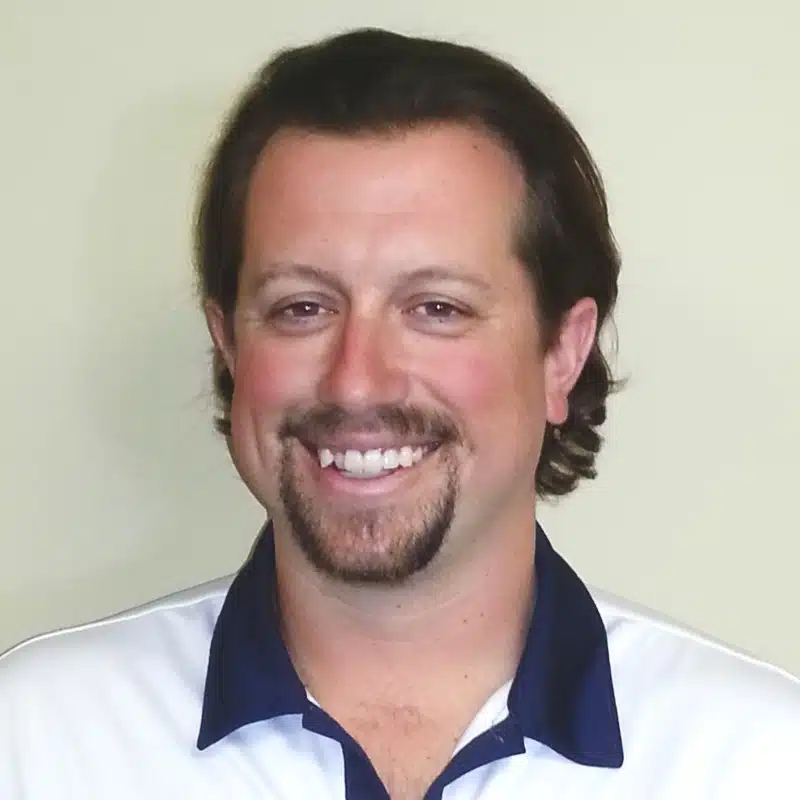
Clint is PGA-certified and was a Head Teaching Professional at one of Toronto's busiest golf academies. He was also featured on Canada's National Golf TV program, "Score Golf Canada," twice. He graduated with a degree in Golf Management from the College of the Desert in California and studied under Callaway's co-founder, Tony Manzoni. He has a handicap index of 6.2 and spends the winters near Oaxaca, Mexico, where he plays twice a month at the Club de Golf Vista Hermosa. He's written over 100 articles at GolfSpan since 2021. You can connect with Clint at LinkedIn, FB, his website, or Clintcpga@gmail.com.